
What Are AI Landing Pages? The Complete Guide for 2026
AI landing pages are really changing how marketers launch campaigns, test different approaches, and scale things up. It is not because of the way they look, and it is not even because they are trendy at all. It is more than they get rid of the biggest problem you run into with performance marketing,

AI landing pages are really changing how marketers launch campaigns, test different approaches, and scale things up.
It is not because of the way they look, and it is not even because they are trendy at all.
It is more than they get rid of the biggest problem you run into with performance marketing, and that is how fast you can actually get things done.
For a long time, if you wanted to build a landing page, it meant starting with nothing.
You had to pick a template, then someone had to write all the copy from scratch.
After that, you designed various sections yourself. You also had to integrate forms, set up hosting, install tracking pixels, and just hope the first version actually converted visitors.
That whole workflow could take a long time. And honestly, in markets where everyone’s competing hard, being slow means you’re gonna lose.
AI landing pages reduce the amount of effort between having an idea and getting it out there.
Instead of spending hours and hours just building the first draft, marketers are now able to generate structured landing pages that are focused on conversions, and they can do it in minutes.
Then they refine them, launch them, and start testing right away.
In this guide, we are going to cover:
- What AI landing pages actually are.
- How AI landing page builders work.
- What is the difference between AI-generated landing pages and regular templates
- Different types of AI landing pages you can use.
- How to build AI landing pages that convert at a high rate, step by step, in an easy manner.
- Common mistakes so you do not have to go through them.
- And why AI landing pages are starting to become the standard for lead generation.
What Is an AI Landing Page?
An AI landing page is a landing page where artificial intelligence assists with structure, copy, layout, and optimization.
It is not just a page “written by AI.”
It is a system where AI helps you:
- Generate conversion-focused structure
- Create niche-specific messaging
- Produce headline variations
- Suggest angles and hooks
- Accelerate testing
- Improve iteration speed
AI landing pages put the focus on performance, not just on how the page looks. If you are building AI landing pages for lead generation, then the goal is not to win design awards.
The real goal is all about getting qualified leads while keeping the acquisition cost as low as possible.
For more detailed breakdowns of lead qualification structure, you might find our guide on AI Landing Pages for Lead Generation helpful.
AI Landing Pages vs Traditional Templates
Traditional landing page builders depend a lot on templates. Sure, templates often look pretty clean, but they do have a lot of limitations:
- The structure of each section tends to be very generic.
- The messaging is broad and not very specific.
- You have to do all the copywriting by hand.
- It takes a longer time to try different iterations.
- You can not easily test different angles.
If you would like to understand the performance differences, check out our detailed comparison of what actually works for Lead Generation in AI-generated landing pages vs templates.
AI landing pages are different because they start with context, not with layout. Instead of just picking some “solar template”, you would provide details like:
- Who is your target audience?
- What their pain points are.
- What action do you want them to take?
- Where your traffic is coming from.
- What kind of offer are you making?
Then, the AI generates a structure that matches the intent behind all those things. And honestly , that difference is pretty critical.
How AI Landing Pages Work
To really get how AI landing pages work, it is important to understand the different parts of the system.
AI for Structure
Landing pages that convert well usually follow some kind of psychological sequence:
- A headline that grabs attention.
- Escalating the problem that the visitor is facing.
- Establishing authority.
- Explaining how the solution works.
- Showing social proof.
- A clear call to action.
AI can recognize these frameworks and build structured sections. With AI, the structured sections replace just throwing together random paragraphs.
This definitely helps avoid one of the biggest mistakes people make when creating landing pages, and that is having random blocks of content without any real narrative flow.
AI for Conversion-Focused Copywriting
- AI landing page tools generate:
- Headlines that grab attention.
- Subheadlines that add context.
- Bullet points that highlight the benefits.
- Explanations of how things work.
- Variations of the call to action.
FAQ sections.
However, if you want AI landing pages that work well, you need to give it structured prompts. So not just some general ideas.
If you are after practical guidance on how to actually write prompts that get the right kind of traffic, you will want to check out How to Build AI Landing Pages That Actually Qualify Leads.
Specific prompts will give you more specific results; Generic prompts will just produce generic pages without any real value.
AI for Angle Testing
Performance marketers almost never get it perfect on the first version.
AI landing pages let you make changes quickly:
- Different headlines.
- Different pain points.
- Different ways of emphasizing the benefits.
- Different emotional triggers.
- Instead of having to rewrite everything from scratch, you can just duplicate the page and refine it. This really makes it possible to test way more things.
AI for Personalization and Segmentation
AI landing pages are able to generate versions that are tailored for things like:
- Paid traffic campaigns.
- Organic traffic.
- Local audiences.
- Different industries.
- For example:
A dedicated landing page for solar lead generation.

A targeted debt relief landing page.
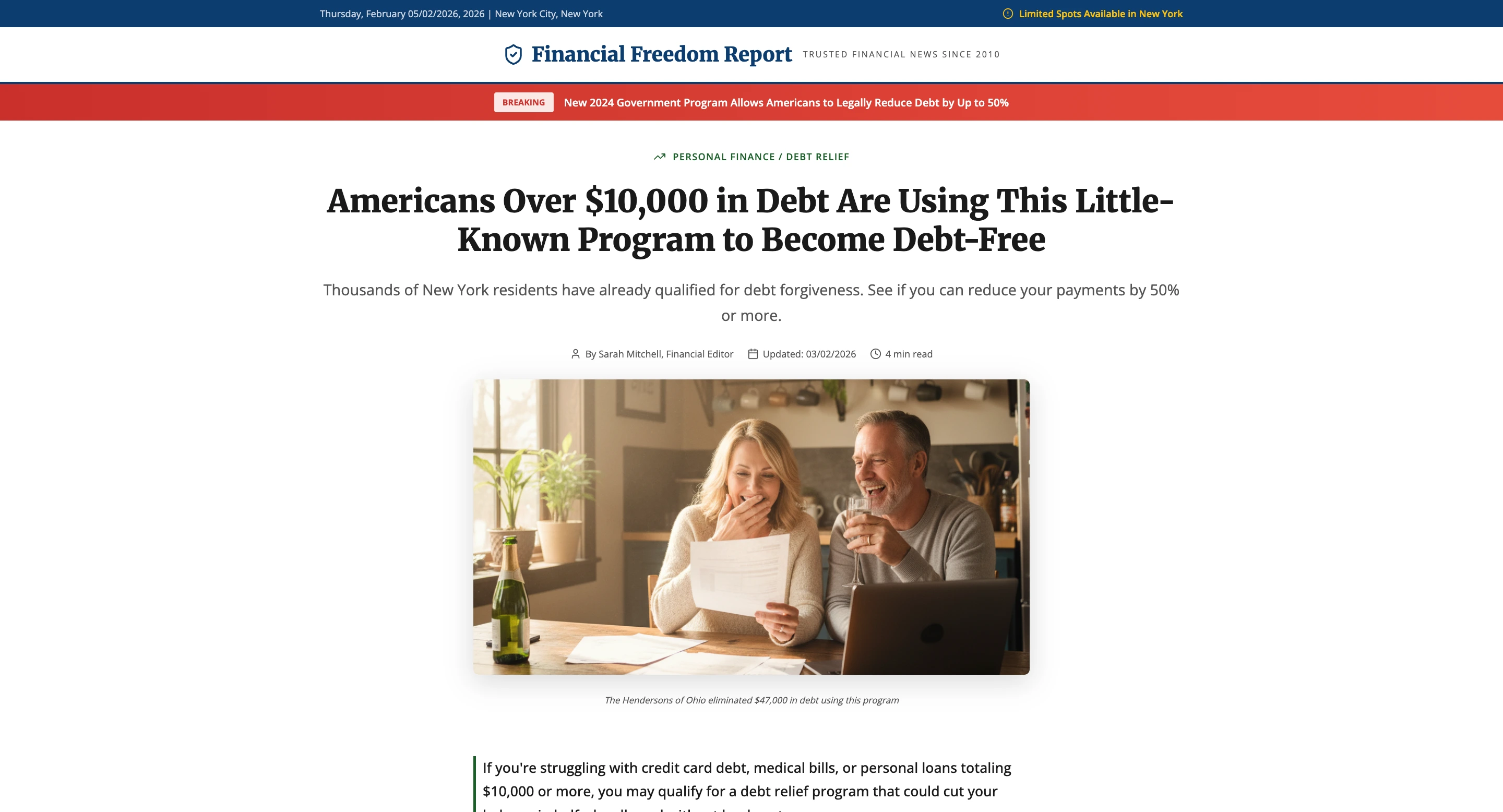
Being able to deploy pages fast becomes a huge advantage.
Types of AI Landing Pages
AI landing pages are not limited to just one format or type.
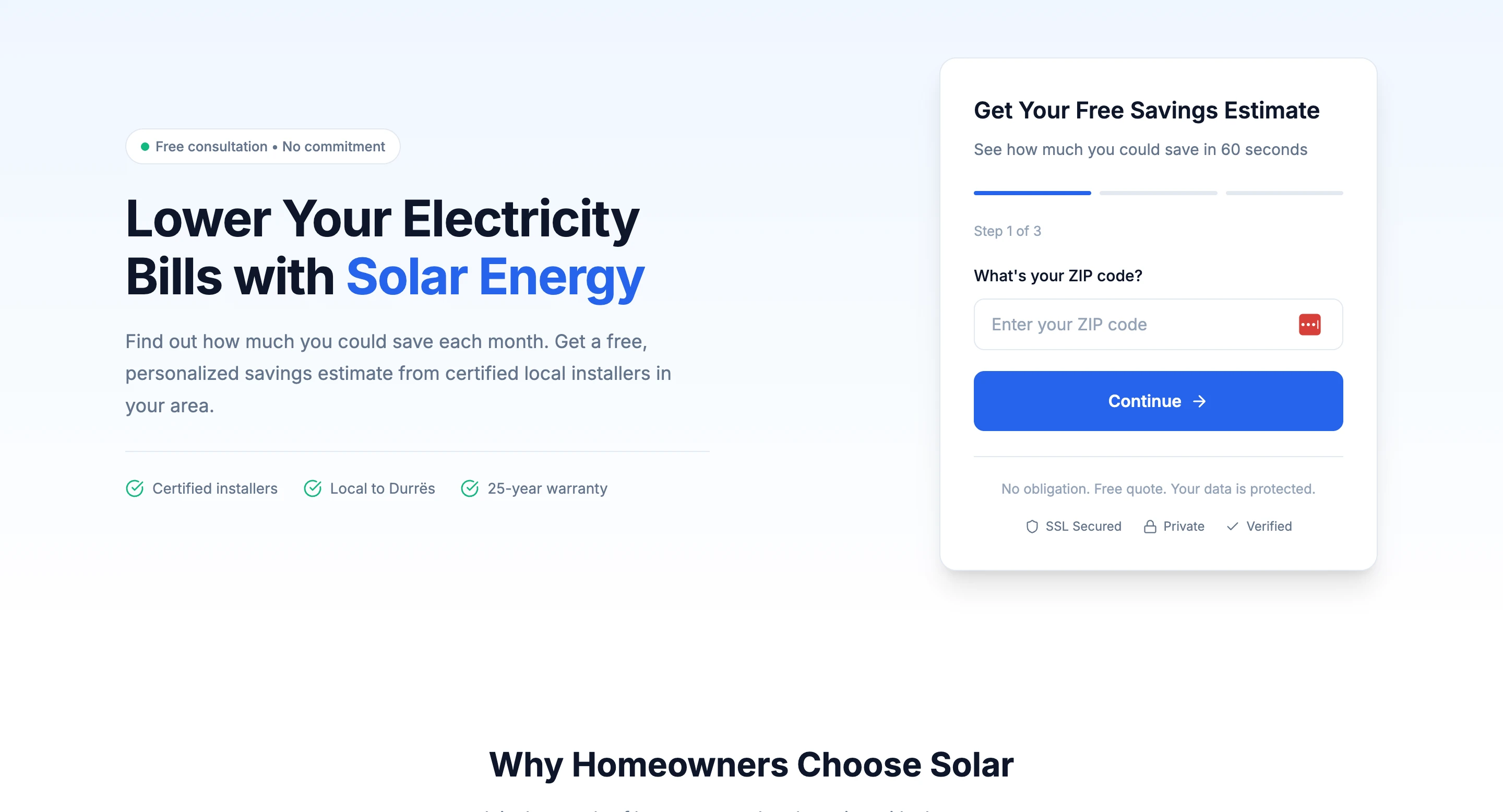
1. AI Lead Generation Landing Pages
These are designed to collect form submissions or to gather inputs through a multi-step process.
Key things to focus on:
- Making the value proposition very clear.
- Having a form structure that is easy to fill out.
- Showing indicators that build trust.
- Using logic to qualify leads.
Example AI lead generation landing page built using LanderLab AI:
2. AI Advertorial Landing Pages
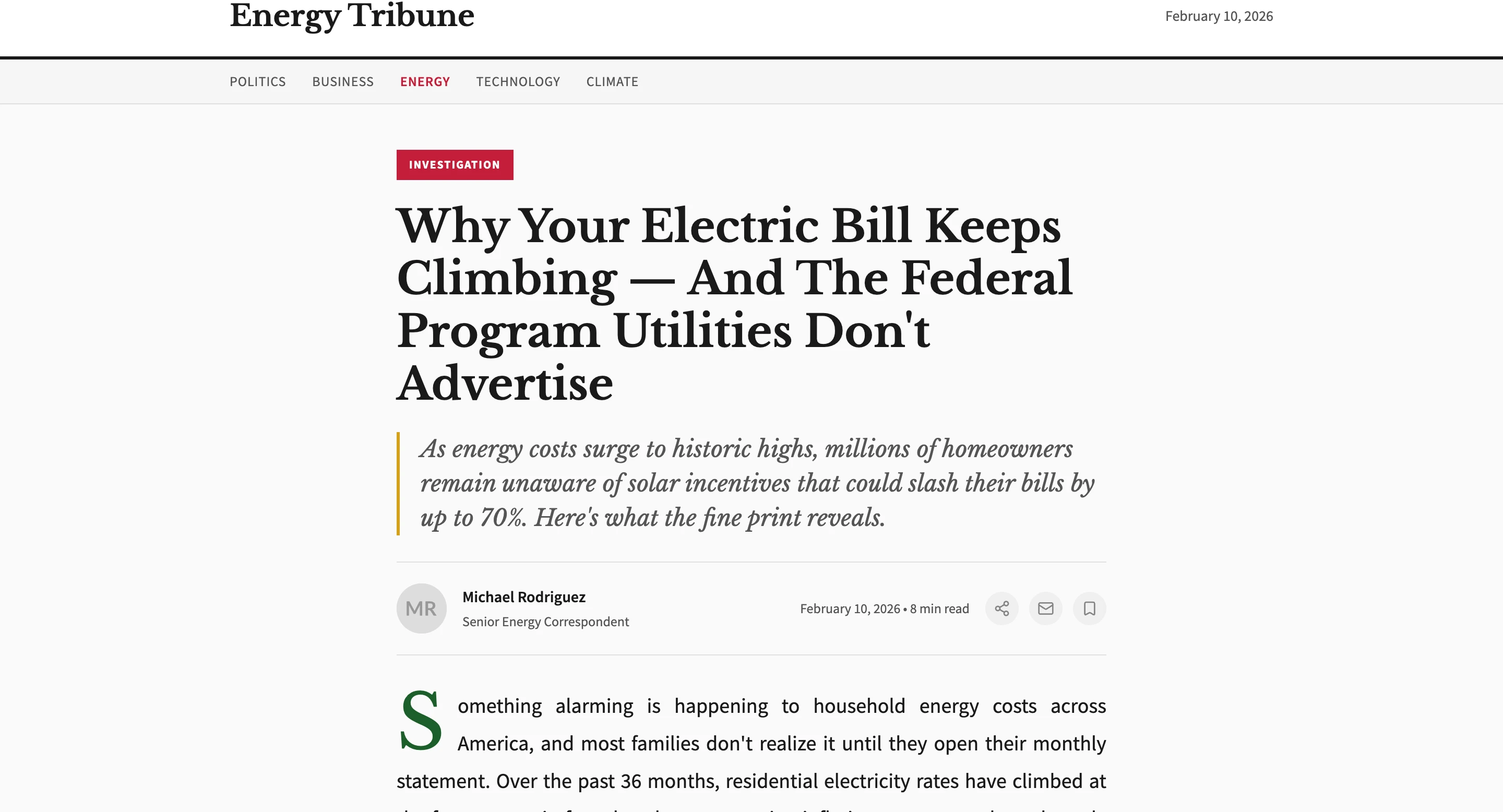
These are narrative-driven pages, and they are designed to warm up the traffic before you actually send the visitors to an offer.
They combine:
- Editorial storytelling.
- Establishing authority.
- Explaining how the solution works.
- Soft transitions to the call to action.
For detailed instructions, make sure to read How to Create a High-Converting AI Advertorial Landing Page. Advertorials pack a punch because they change the visitor’s beliefs before asking them to take action.
3. AI Quiz and Multi-Step Funnels
Interactive flows will definitely increase engagement, and they also allow you to qualify visitors better.
AI helps in generating:
- Question logic.
- Segmentation pathways.
- Messaging that is based on the outcome of the quiz.
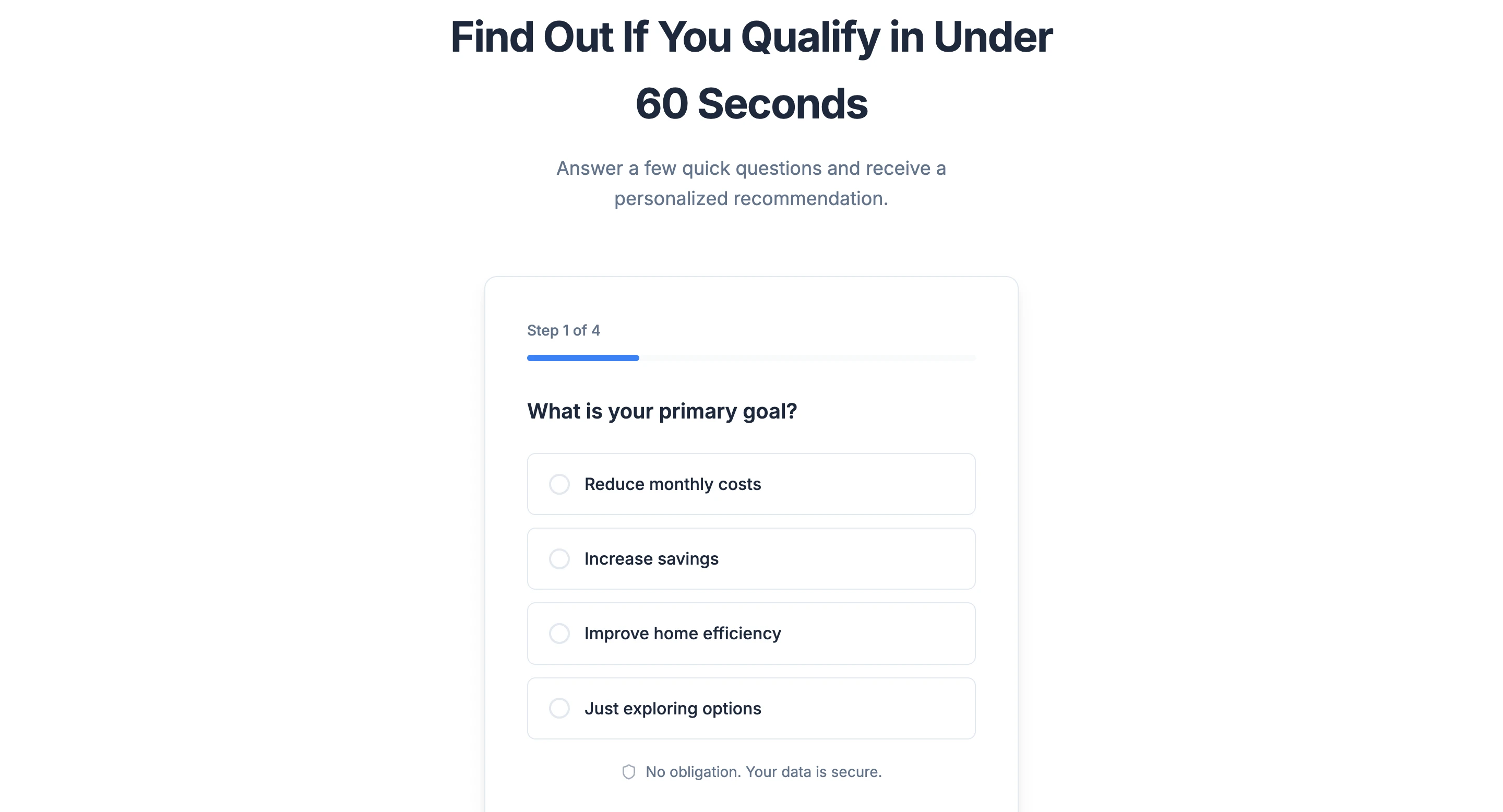
Quiz funnels usually do better than long forms because they reduce the psychological friction.
4. AI Pay-Per-Call Landing Pages
These are built to get the visitors to make a phone call directly.
- Strong emphasis is placed on:
- Creating a sense of urgency.
- Showing local trust signals.
- Call tracking integration.

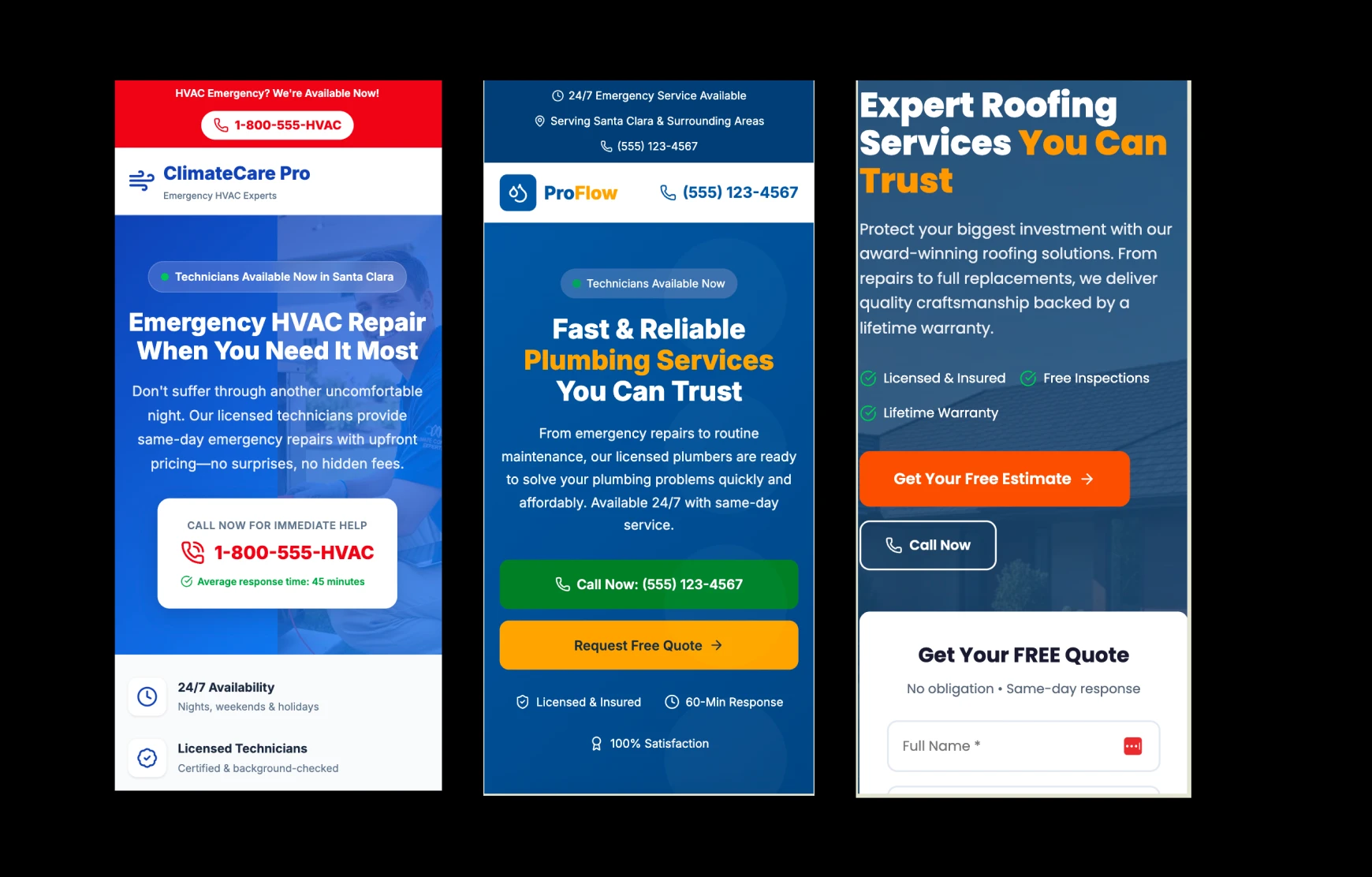
5. Local Service Landing Pages with AI
These are pages that can be deployed quickly for:
- Solar installers.
- Roofers in the area.
- Plumbers.
- HVAC companies need to get more clients.
- Insurance agents.
Benefits of AI Landing Pages
1. Execution Speed
You go from idea to a live page in a matter of minutes. This brings down production bottlenecks quite a bit.
2. Increased Testing Velocity
AI landing pages let you make and test more variations in a shorter amount of time. More tests will give you more data, and more data translates into better decisions about optimization.
3. Lower Creative Friction
There is no blank canvas staring back at you. You also do not have to get stuck with a specific template. AI gives you structured starting points, which can be really helpful if you are stuck on a project.
4. Cost Efficiency
There is less of a need to rely on separate:
- Copywriters.
- Designers.
- Developers.
- Hosting providers.
5. Centralized Control
Modern AI landing page platforms include integrations for:
- Hosting
- Lead capture
- Form logic
- A/B testing
- Tracking
Step-by-Step: How to Create High-Converting AI Landing Pages
Here is a workflow that has proven effective.
Step 1: Define Your Offer and Goal
Start by asking yourself:
- What problem are we solving for new customers??
- Who is our target audience we are trying to reach?
- What action would you like them to take when going onto the landing page?
A little simple clarity goes a long way at the start!.
Step 2: Craft a Structured Prompt
Try to avoid vague instructions. An example of a vague instruction is “Create a landing page.”
Instead, be specific, and specify things like:
- The industry.
- The audience.
- What our offers are.
- The desired tone, which is more important than people realize, is on landing pages.
- The conversion goal.
Structured inputs always create structured, meaningful outputs.
Step 3: Refine the Mechanism
The mechanism explains why something actually works. Without a mechanism, landing pages feel like they are just all hype. AI can draft it, but you have to refine it and make it presentable.
Step 4: Add Social Proof
Add some:
- Testimonials from past clients.
- Data points showing the page’s success.
- Trust badges that give the website some extra credibility.
- Case results.
AI can format these sections, but real proof will build that trust with your target audience.
Step 5: Optimize CTA Placement
Place CTAs:
- After the problem section has been shown and solved.
- Right after social proof, if possible.
- At the end of the landing page.
Repetition will always increase the conversion opportunity.
Step 6: Launch and Test Variations
Duplicate the main landing page. Change a headline. Test the waters with the new angle. Monitor the pages’ performances. After all, speed matters a ton more than the perfect first draft.
Common Mistakes With AI Landing Pages
1. Over-Reliance on Raw Output
Raw AI drafts are nothing more than just starting points. They require refinement, that’s why having an AI landing page creator + built-in editor is a power duo.
2. Using Generic Prompts
Things like specificity will drive the overall performance of your pages.
3. Ignoring Structure
High-converting AI landing pages actually follow a real and logical narrative progression. This can be seen by the customer.
4. Not Testing Angles
One version will rarely lead to success for marketing purposes.
5. Separating Tools
When hosting, forms, tracking, and testing live in separate tools, iteration slows.
That is why many AI landing page platforms, including LanderLab, centralize generation, hosting, lead capture, and A/B testing in one system to remove friction from the optimization cycle.
Are AI Landing Pages the Future?
AI landing pages definitely aren’t replacing humans or marketers. However, they are amplifying them and making marketers more powerful.
Marketers who adapt and keep up with the trends gain:
- Faster deployment speeds on testing.
- More testing capacity to monitor trends.
- Better iteration cycles.
- Competitive advantage.
Those who rely on templates alone will struggle to keep up with the pace.
The gap that lies between the idea and execution can be the determining factor in who grows. AI will help reduce the gap.
Final Thoughts
AI landing pages represent a new shift from manual production to strategic iteration. They are not necessarily all about automation for convenience.
They are about:
- Speed
- Structure
- Testing
- Scalability
In competitive digital markets, the ability to test quickly and deploy efficiently is often the difference between scaling and stagnation.
AI landing pages make that possible.
Create AI Landing Pages
in Minutes
Transform your marketing with AI-powered landing pages that convert. LanderLab’s intelligent builder creates stunning, high-performing pages tailored to your audience—no coding required.
7-day free trial • No credit card required


