15 Best Typeform Alternatives in 2026 (For Marketers & Growth Teams)
Typeform is definitely one of the most recognizable form builders. Its conversational design and clean interface really helped to change how online forms look and how they feel, you know? But just because something is popular does not always mean it is the best fit. As marketing teams scale up their

Typeform is definitely one of the most recognizable form builders. Its conversational design and clean interface really helped to change how online forms look and how they feel, you know?
But just because something is popular does not always mean it is the best fit.
As marketing teams scale up their campaigns and really start to refine their tech stacks, a lot of them find that Typeform just does not quite meet their needs anymore as they evolve.
Pricing can go up quite a bit with volume. Testing options, they are still kind of limited. And funnel control, well that often means you need even more tools.
And that is usually when the search for a better Typeform alternative begins, isn’t it always the way?
This guide breaks down what I think are the 15 best Typeform alternatives in 2026, and these have been carefully picked out for marketers and growth teams; I have evaluated each tool based on its conversion potential, how deeply it integrates, how customizable it is, whether it scales well, and of course the analytics it offers.
If you want to combine powerful AI quiz funnels with conversion-focused landing pages, check out our guide to AI landing pages for lead generation.
TL;DR: The Best Typeform Alternatives in 2026
Looking for the best Typeform alternative? Here are the top options ranked by use case:
- Best Typeform alternative for lead generation: Landerlab
- Best Typeform competitor overall: Jotform
- Best free Typeform alternative: Tally
- Best Typeform alternative for conversational forms: Paperform
- Best Typeform alternative for HubSpot users: HubSpot Forms
- Best Typeform alternative for surveys and research: SurveyMonkey
- Best free basic form alternative to Typeform: Google Forms
- Best enterprise Typeform competitor: Formstack
- Best multi-step lead generation alternative: Growform
- Best interactive Typeform alternative: Involve.me
- Best Typeform alternative for e-commerce: Klaviyo Forms
How Do These Typeform Alternatives Compare?
Tool | AI Quiz Builder | Advanced Conditional Logic | Landing Page Builder | Built-in A/B Testing | Best For |
|---|---|---|---|---|---|
Landerlab | Yes | Yes | Yes | Yes | Paid traffic & scalable lead funnels |
Jotform | Limited | Yes | Yes | No | Feature depth & integrations |
Tally | No | Basic | No | No | Free, simple forms |
Paperform | No | Yes | Limited | Limited | Conversational form style |
Fillout | No | Yes | No | No | Notion & Airtable users |
HubSpot Forms | No | Basic | No | No | HubSpot CRM workflows |
SurveyMonkey | No | Yes | No | No | Surveys & research |
Google Forms | No | Basic | No | No | Free internal forms |
Formstack | No | Yes | No | No | Enterprise compliance |
Growform | No | Yes | No | No | Multi-step lead gen |
Microsoft Forms | No | Basic | No | No | Microsoft 365 teams |
ConvertKit Forms | No | Basic | Yes | Limited | Email-first growth |
Wufoo | No | Basic | No | No | Quick deployment |
Involve.me | No | Yes | Yes | Yes | Interactive quizzes |
Klaviyo Forms | No | Basic | Yes | Limited | Ecommerce brands |
What to Look for in a Typeform Alternative
Before you just choose any replacement, you should probably think about what really matters for how you work day to day.
Start with conversion optimization, it is a good first step.
Does the platform help you actually capture qualified leads, or does it basically just collect data?
Next up, take a look at integrations seriously.
A powerful form is only ever useful if it can connect without any problems at all to your CRM, your email platform, and all your advertising tools.
And do not forget Customization, which also plays a huge role here.
Your forms really should feel like they are a natural extension of your brand, not something generic that everyone else is using too.
Of course, the pricing is another critical factor. As the number of submissions goes up, costs could well escalate pretty quickly. The right platform should scale along with you, but without costing you a fortune.
Finally, analytics really do matter here. You will need to see things like drop-offs, completion rates, and what users are doing, so you can keep improving performance. Of course.
Different teams are going to think different things are most important. A research team might really value the amount of data they can get, whereas someone in performance marketing will probably care most about those conversion rates and keeping control of the funnel.
15 Best Typeform Alternatives Listed
1. Landerlab: Best for Lead Generation Marketers
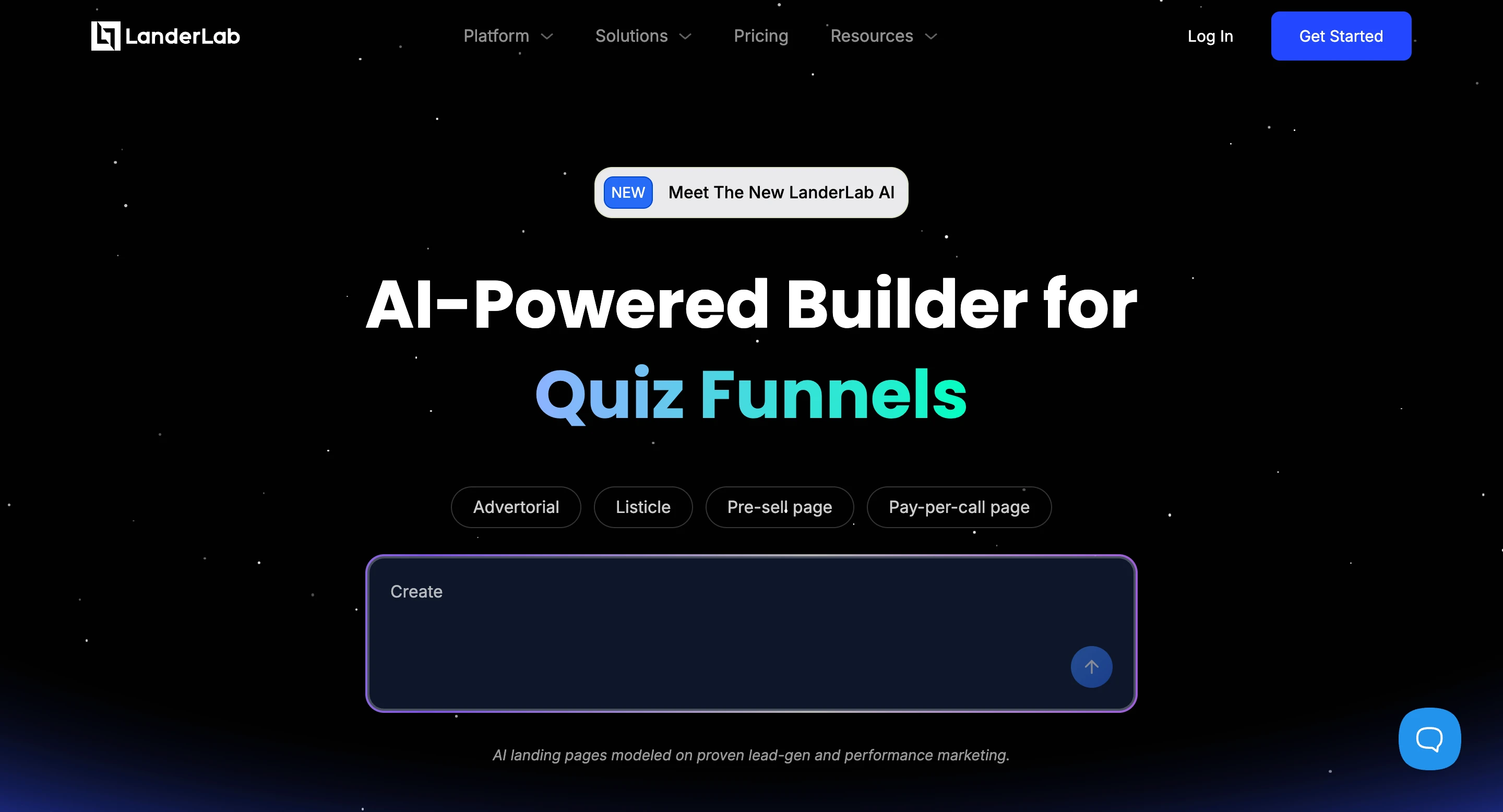
Best for: Growth teams, performance marketers, and paid acquisition campaigns
Landerlab is an interesting one; it goes beyond just being one of those traditional form builders. Instead of just sending traffic straight to some standalone form, it is going to let you build the whole conversion experience all in the same place.
Landing page. Form. CTA. And what happens after they convert.
Basically, everything works together, all inside a single platform.
If you got teams running Google Ads, Meta campaigns, Lead Generation, or any other paid traffic channels, this sort of unified approach can really let you move faster and take more control.
You can test out different versions, tweak the messaging, and really optimize the performance without having to mess around with a whole bunch of different tools.
Instead of trying to patch together a bunch of separate platforms, Landerlab gives you a streamlined workflow which is focused on conversion and really built specifically for lead generation.
Key features:
- AI-powered quiz funnels with advanced conditional logic
Build dynamic, multi-step forms that adapt to user answers and qualify leads in real time. - No lead caps on paid plans
Scale campaigns without worrying about hitting submission limits, though monthly traffic thresholds apply based on your plan tier. - Unlimited quiz funnels
Launch as many funnels as you need for different traffic sources, niches, or campaigns. - Built-in A/B testing
Optimize questions, logic paths, and layouts to improve completion rates and lower CPL. - High-speed performance optimized for paid traffic
Designed to maintain conversion rates across Meta, Google, and native ads. - Integrated analytics and conversion tracking
Identify drop-offs, analyze user behavior, and continuously improve performance. - Full landing page builder included
Go beyond standalone forms by creating complete AI-powered landing page + quiz funnels in one platform.
If your goal is more than just collecting responses, you need more than just a form builder. A performance-focused quiz funnel with unlimited scale, built-in testing, and full landing page control offers a clear upgrade over standalone tools.
Build Your First Quiz Funnel in Minutes
Generate landing pages with AI and AI-powered quiz funnels from a single prompt. Built-in A/B testing, analytics, and CRM, no extra tools needed.
2. Jotform
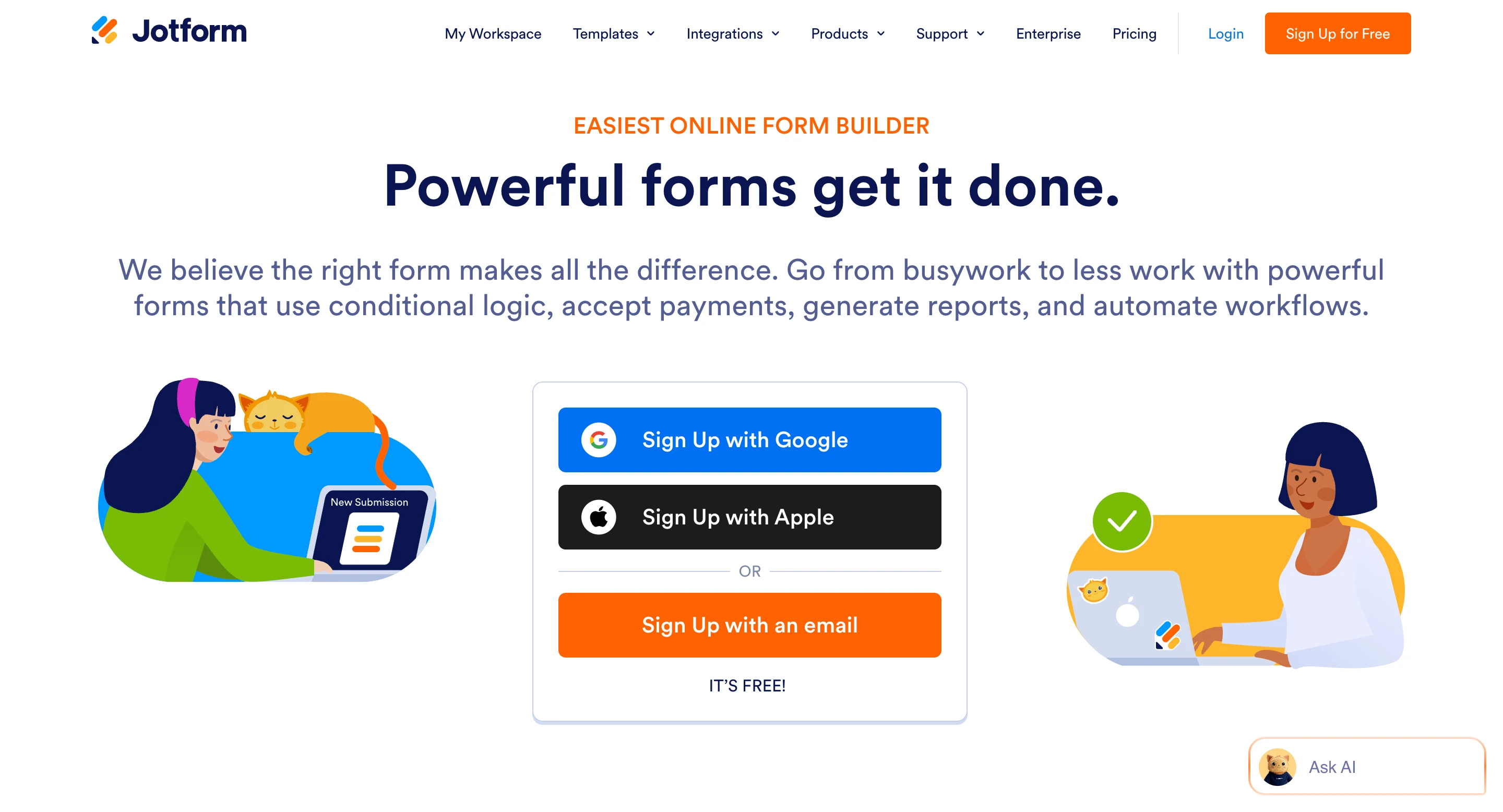
Best for: Teams that require flexibility and advanced customization
Jotform really stands out because of how many features it packs in. With literally thousands of templates, advanced conditional logic, payment processing built right in, and a huge number of integrations, it can handle pretty much any marketing scenario you can think of.
The builder itself feels pretty intuitive, but it also supports complex setups when you need them.
Agencies can benefit from white-label options, and bigger teams are going to like the sub-accounts and the collaboration features.
If you really want depth, then Jotform is got it.
3. Tally
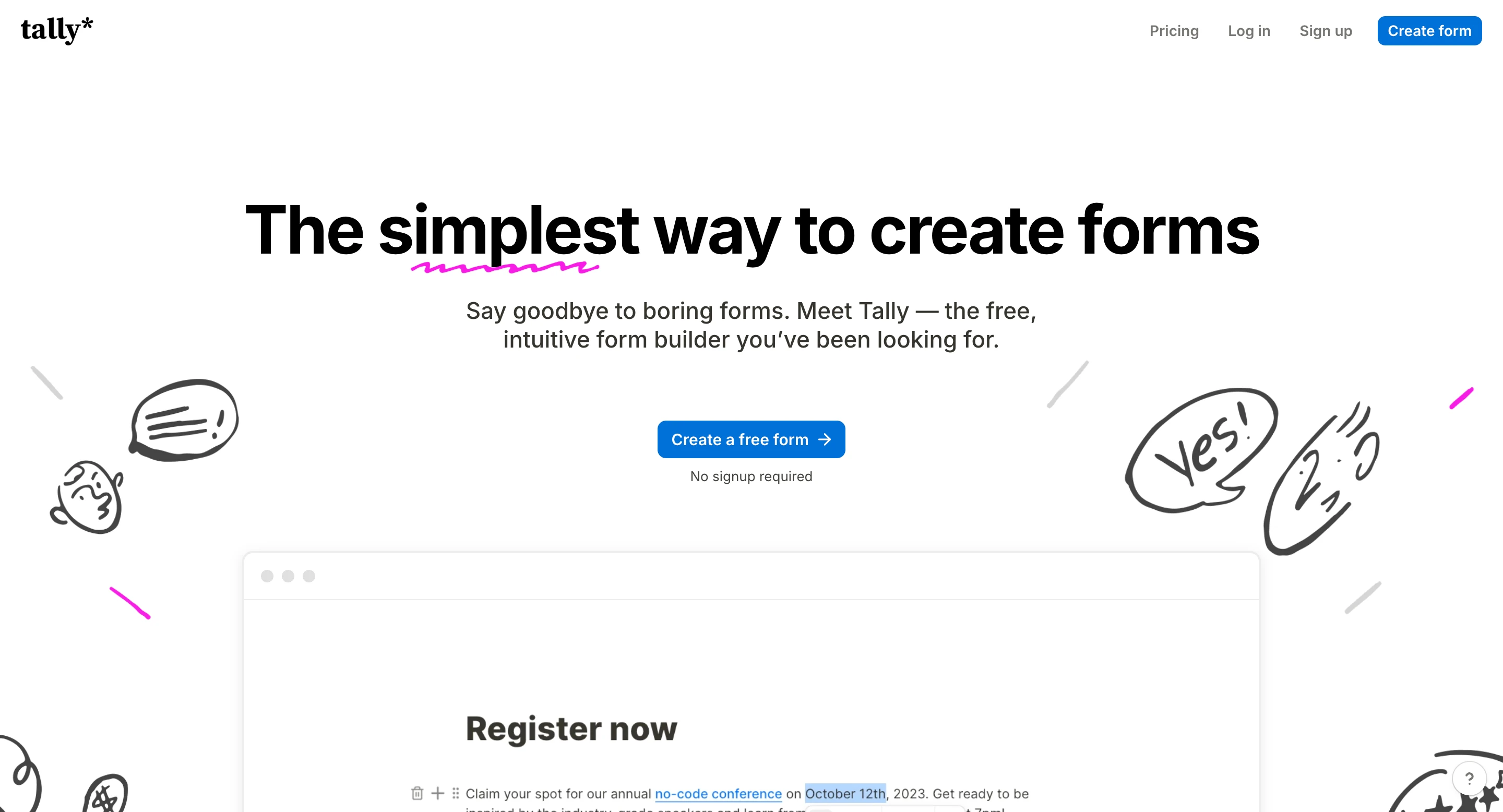
Best for: Small teams and solo marketers
Tally likes to keep things fairly simple, that is the theme. Its clean interface, which is kind of inspired by Notion, feels modern and not too intimidating.
The biggest advantage it has is its free plan, which is actually pretty generous.
Offers unlimited forms and submissions without forcing you to have their branding all over the place makes it a good choice for teams that are trying to keep costs down.
It might not have advanced optimization tools, but for just capturing leads in a straightforward way , it does the job reliably.
4. Paperform
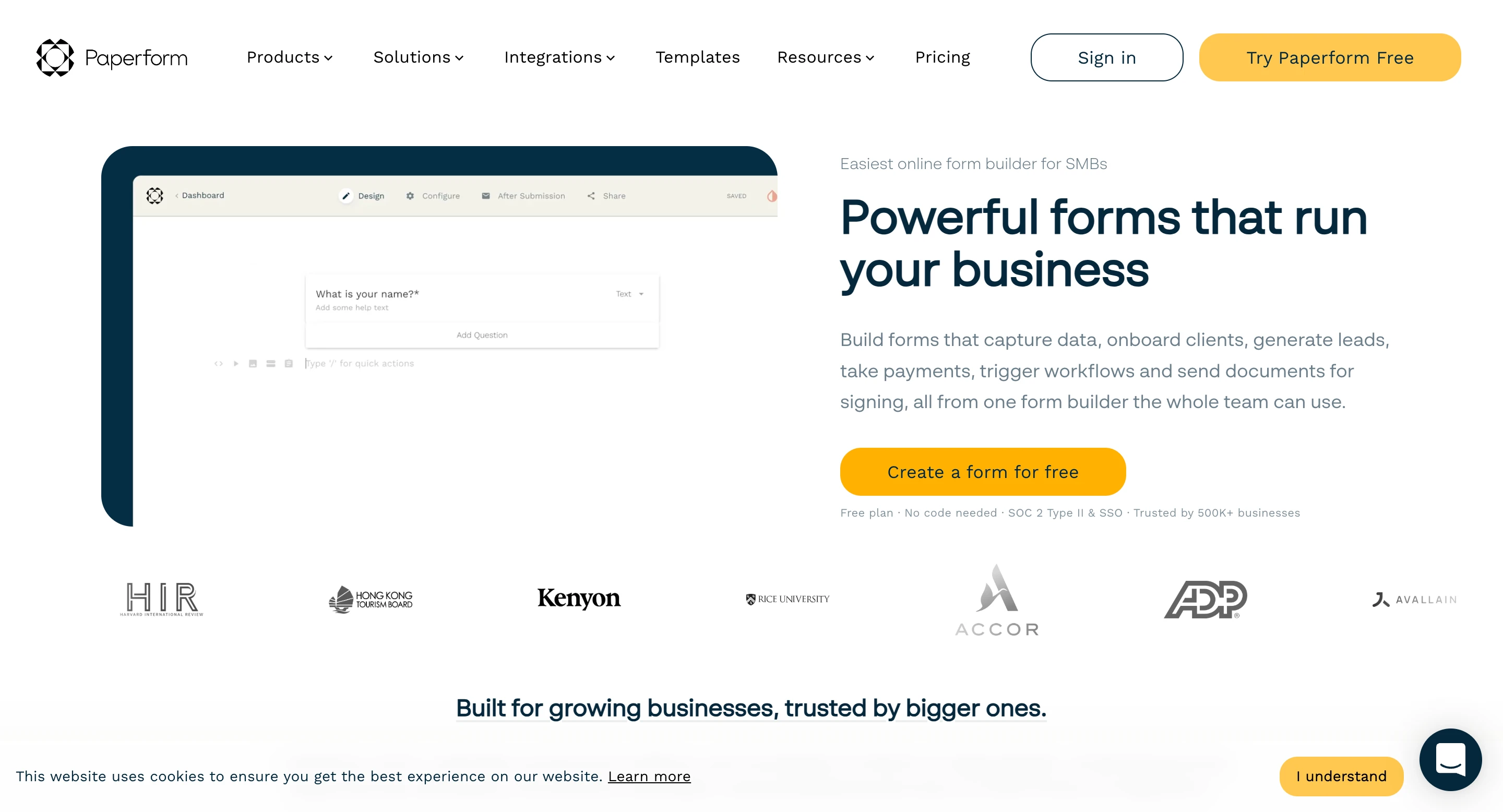
Best for: Teams that want conversational forms with greater design flexibility
Paperform is very similar to Typeform, you know, with the one-question-at-a-time thing. On the other hand, it does give you more customization options and built-in payment processing to boot.
If you have got teams that are collecting bookings, maybe selling digital products, or just building branded experiences, then Paperform provides a pretty polished alternative.
5. Fillout
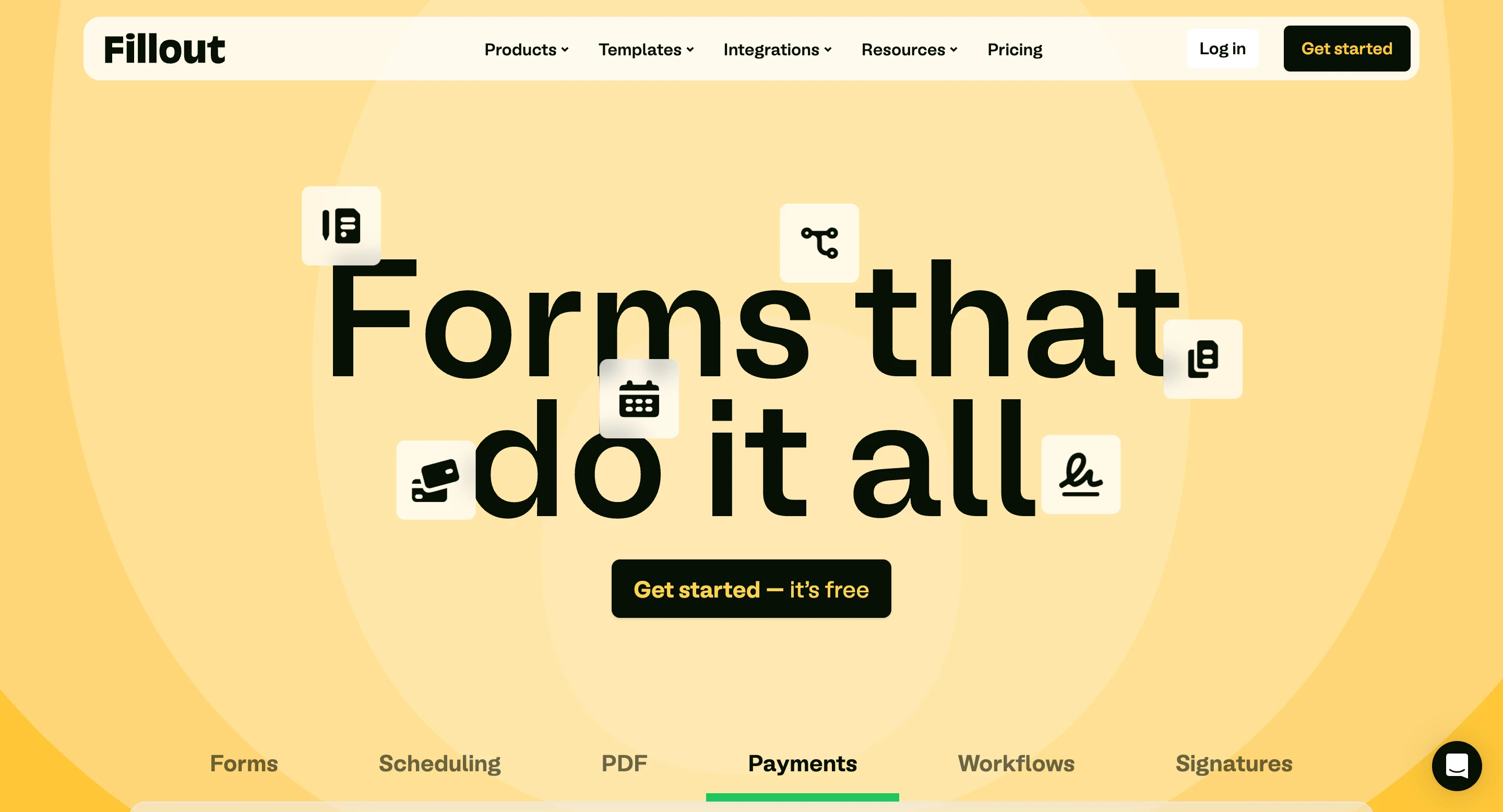
Best for: Teams using Notion or Airtable as core systems
Fillout really shines when you are syncing data; it is a strong point. Instead of having to rely on third-party connectors, submissions can go directly into tools like Notion and Airtable, which is nice.
For data-driven teams, this is going to save time and mean less hassle.
It also includes multi-step forms and conditional logic, so it is competitive when it comes to both design and what it can do.
6. HubSpot Forms
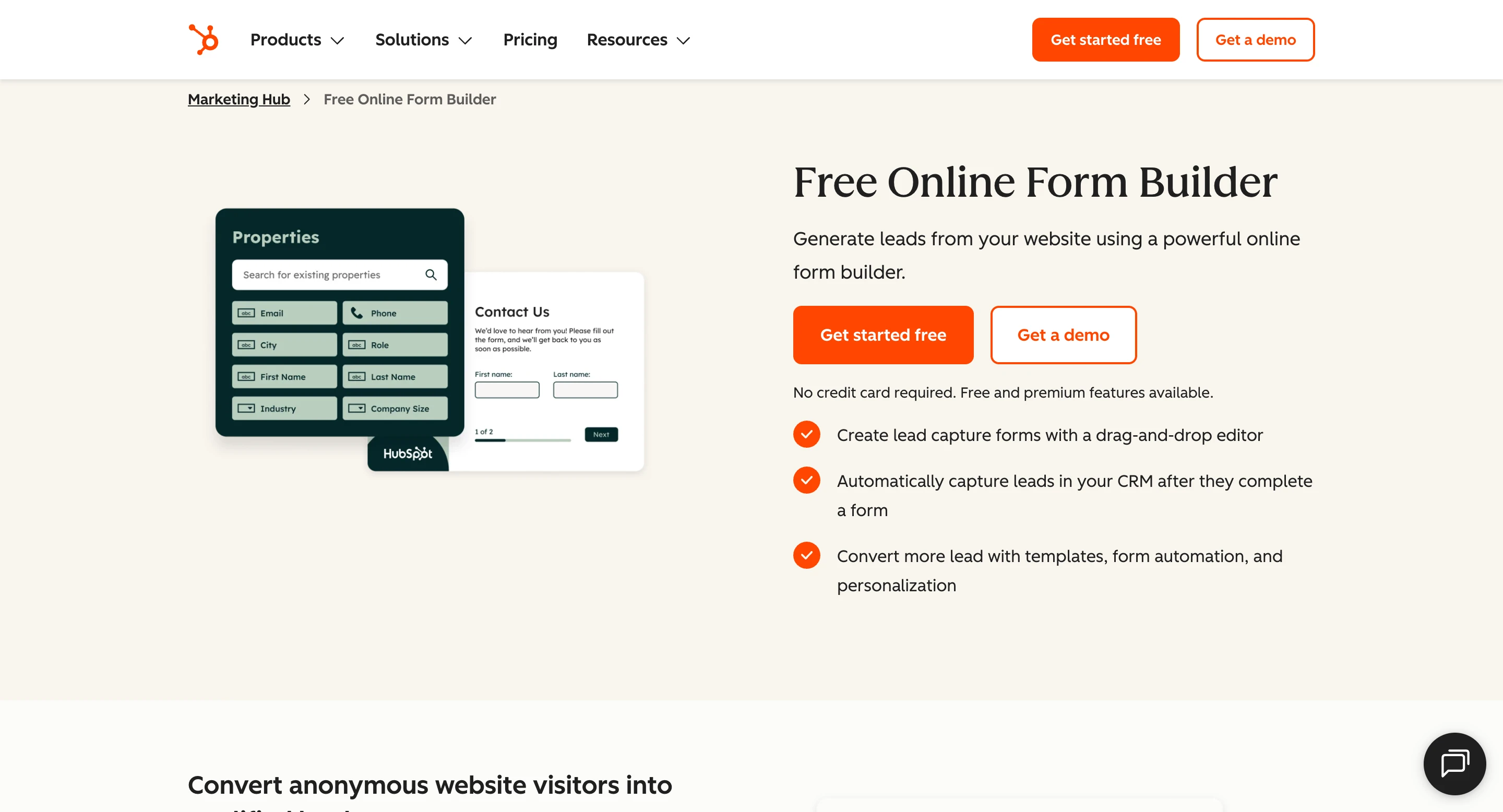
Best for: Teams already operating within HubSpot
If you are already using HubSpot as your CRM, then using their own forms really simplifies a lot, that is clear. Submissions will automatically update contacts, kick off workflows, and feed your reporting dashboards.
The form builder it self, is pretty straightforward but what makes it strong is really the automation and how it is linked to the CRM.
If you are doing inbound marketing, then that connection is hard to beat, to be honest.
7. SurveyMonkey
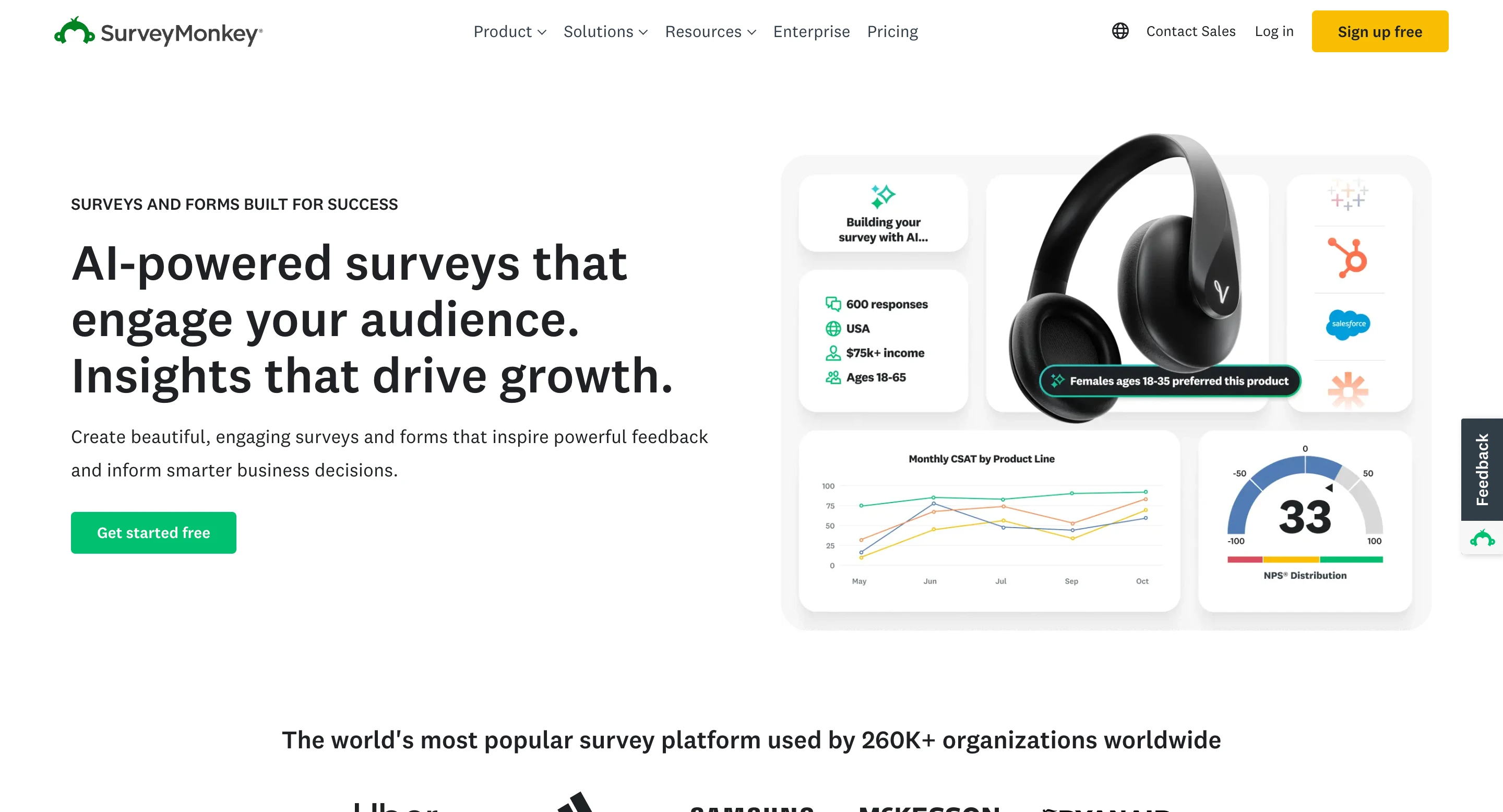
Best for: Customer research and advanced survey analysis
SurveyMonkey is really good at analytics. The benchmarking, sentiment analysis, and cross-tabulation that it offers give teams a much better understanding of the data they are collecting.
If you are more focused on research than on lead funnels, then this platform gives you more to work with when it comes to analyzing things than most other alternatives.
8. Google Forms
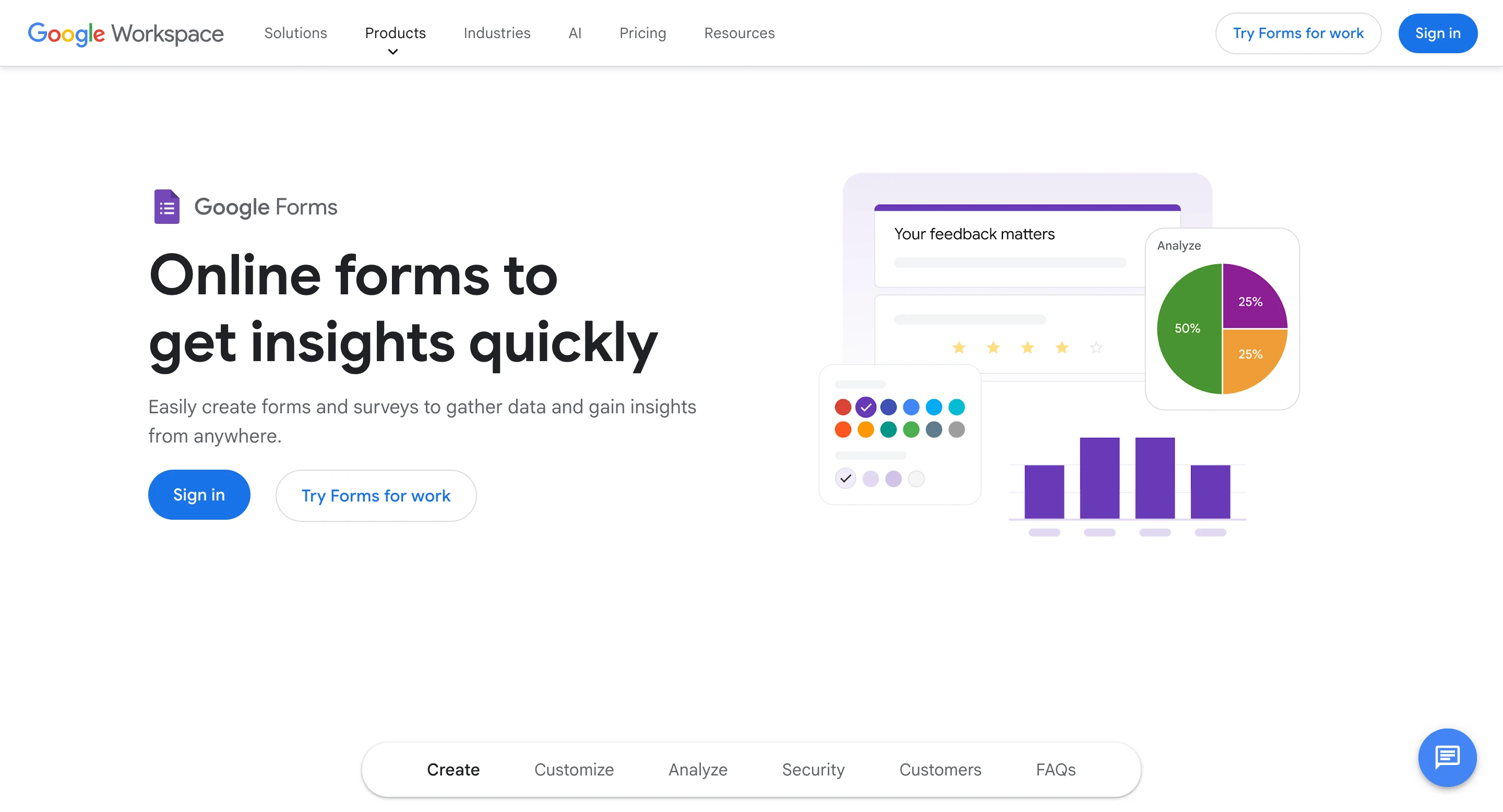
Best for: Quick deployment and internal data collection
Google Forms is a good choice, it is free, fast, and you can depend on it. It also integrates really well with Google Sheets, so managing the data is pretty straightforward.
Alright, it is not the prettiest thing to look at, but for simple stuff it is still really useful.
9. Formstack
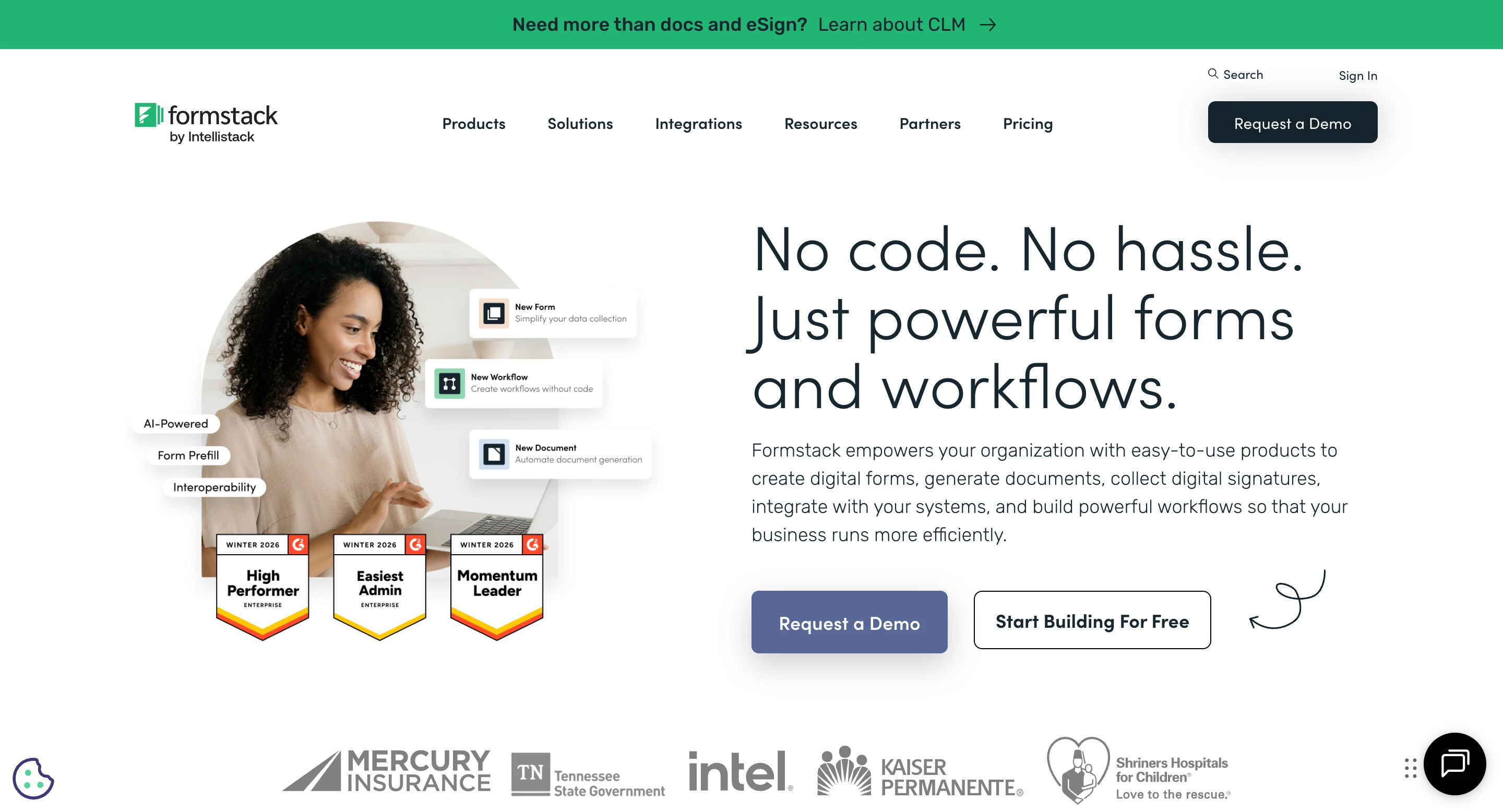
Best for: Organizations with compliance requirements
Formstack is all about security and meeting regulatory standards. It supports HIPAA, SOC 2, and GDPR stuff, so it is a good fit for industries where that matters.
And besides just being compliant, it also offers workflow automation and document generation. Basically, it is more than just a basic form builder.
10. Growform
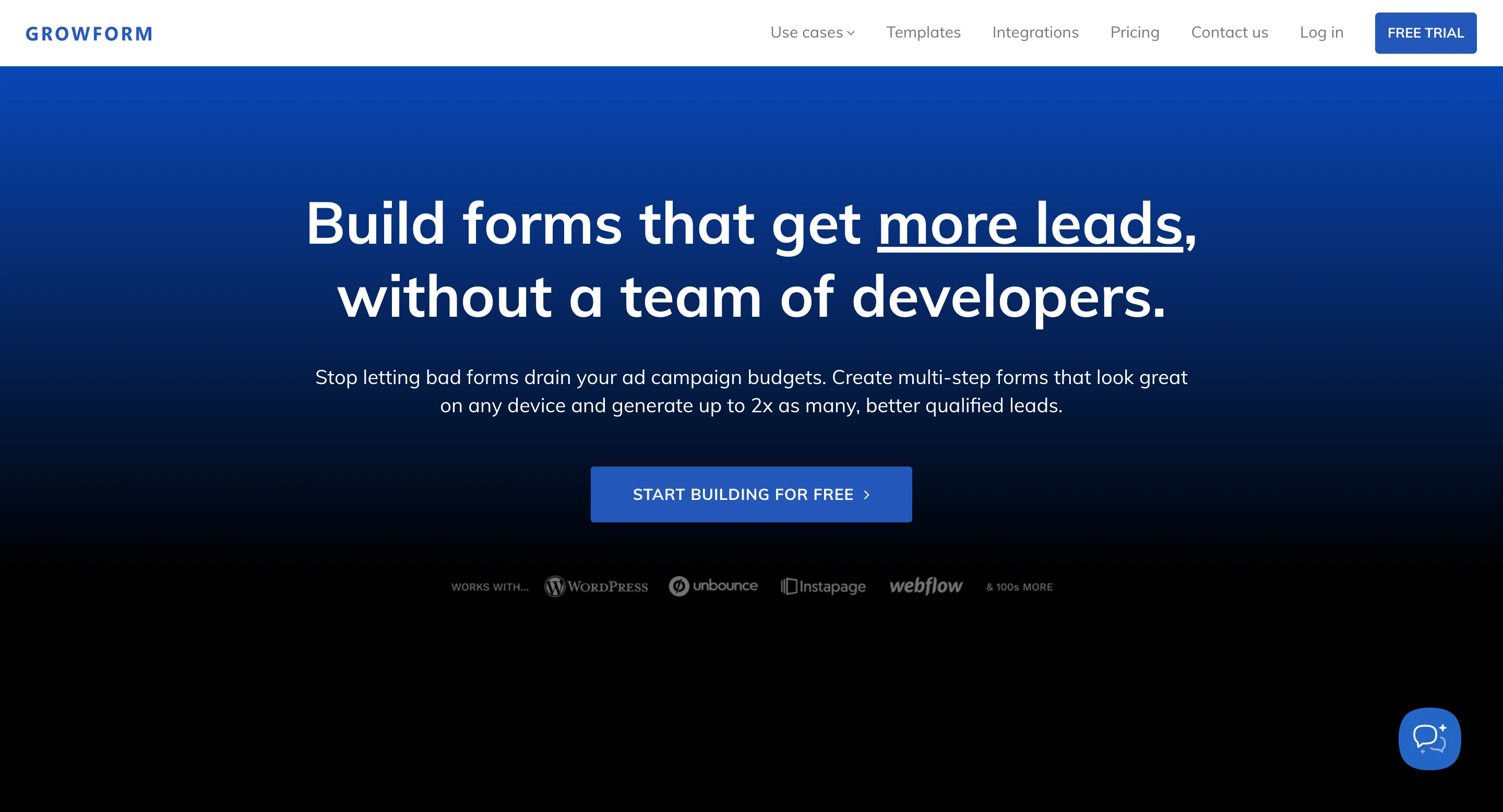
Best for: Performance marketers optimizing conversion rates
Growform is really focused on multi-step lead forms specifically. Their idea is that by leading users through questions bit by bit, they can get better completion rates.
So you will find industries like insurance, finance, and real estate often use this kind of format to try and get better leads.
11. Microsoft Forms — Best for Microsoft 365 Users
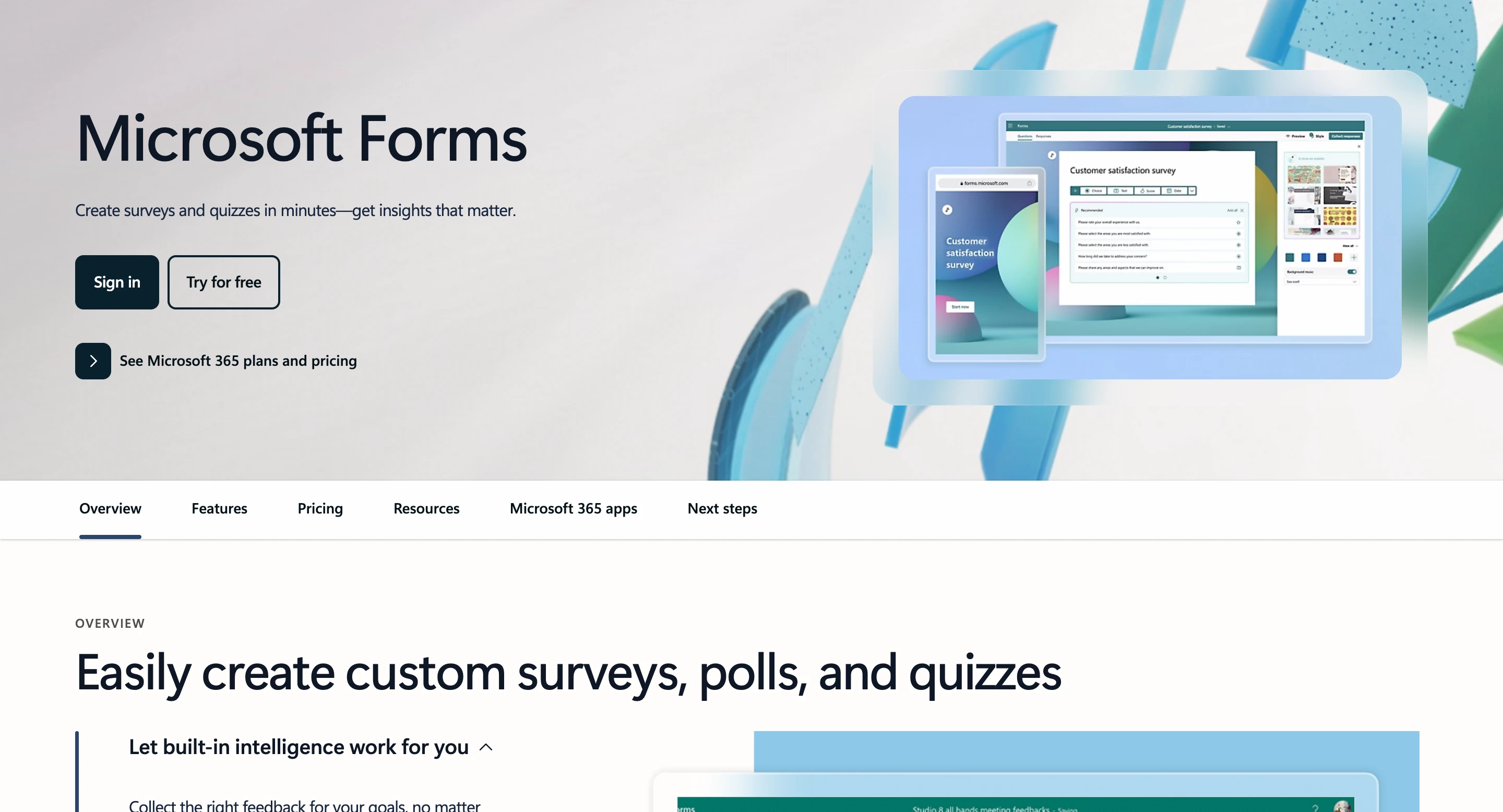
Best for: Teams embedded in the Microsoft ecosystem
Microsoft Forms is designed to work right out of the box with Teams, SharePoint, and Excel. If your organization is already using Microsoft 365, then this is a convenient option that does not cost you extra for more software.
Okay, So it is not going to give you advanced marketing features, but it does make things easier for internal workflows.
12. ConvertKit Forms
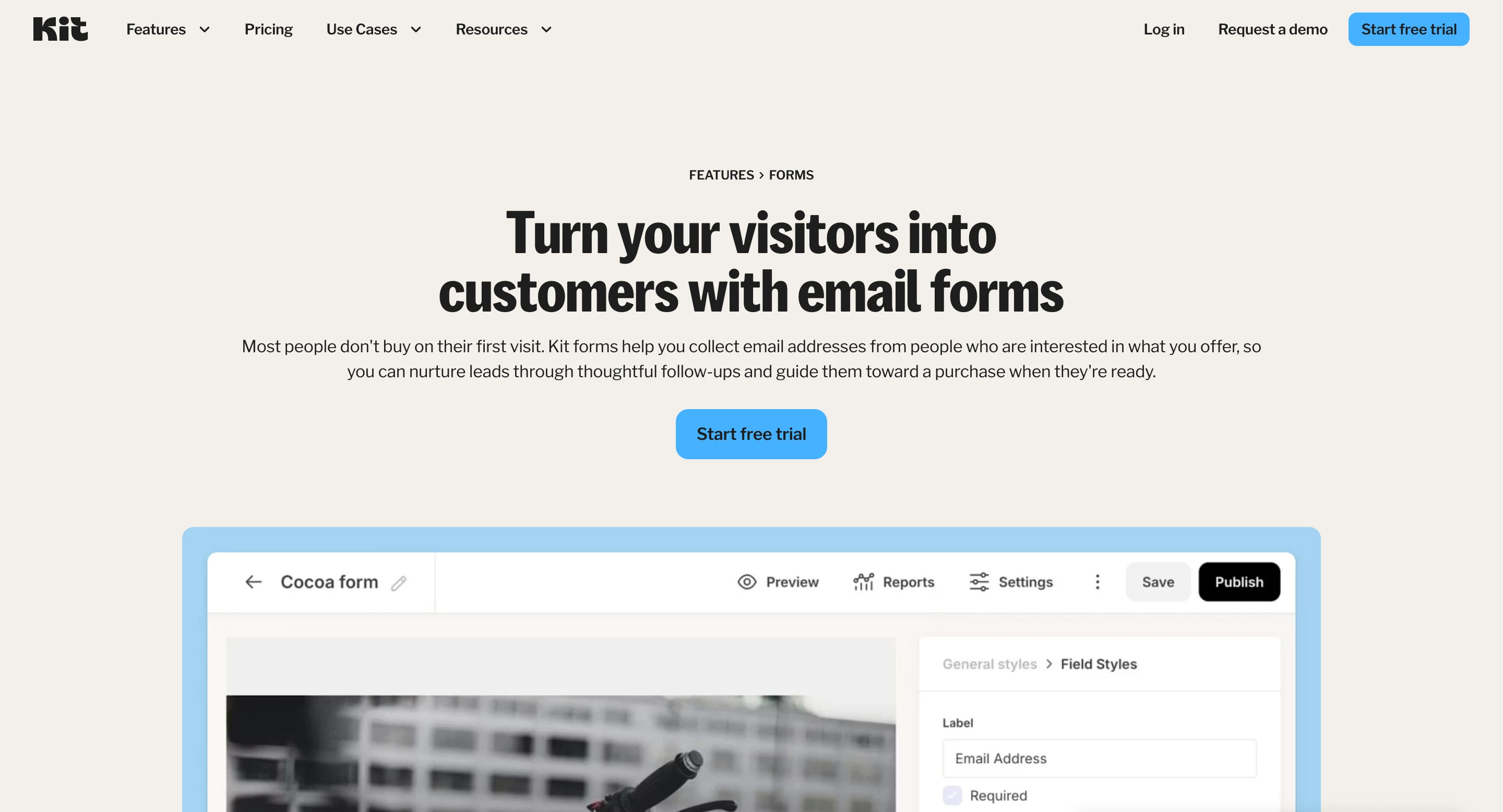
Best for: Newsletter and creator-focused brands
ConvertKit Forms work together directly with ConvertKit’s email automation stuff. As soon as someone submits a form, they can be tagged, sorted into segments, and added to specific email sequences right away.
For content marketers, having that immediate automation is a really big deal.
13. Wufoo
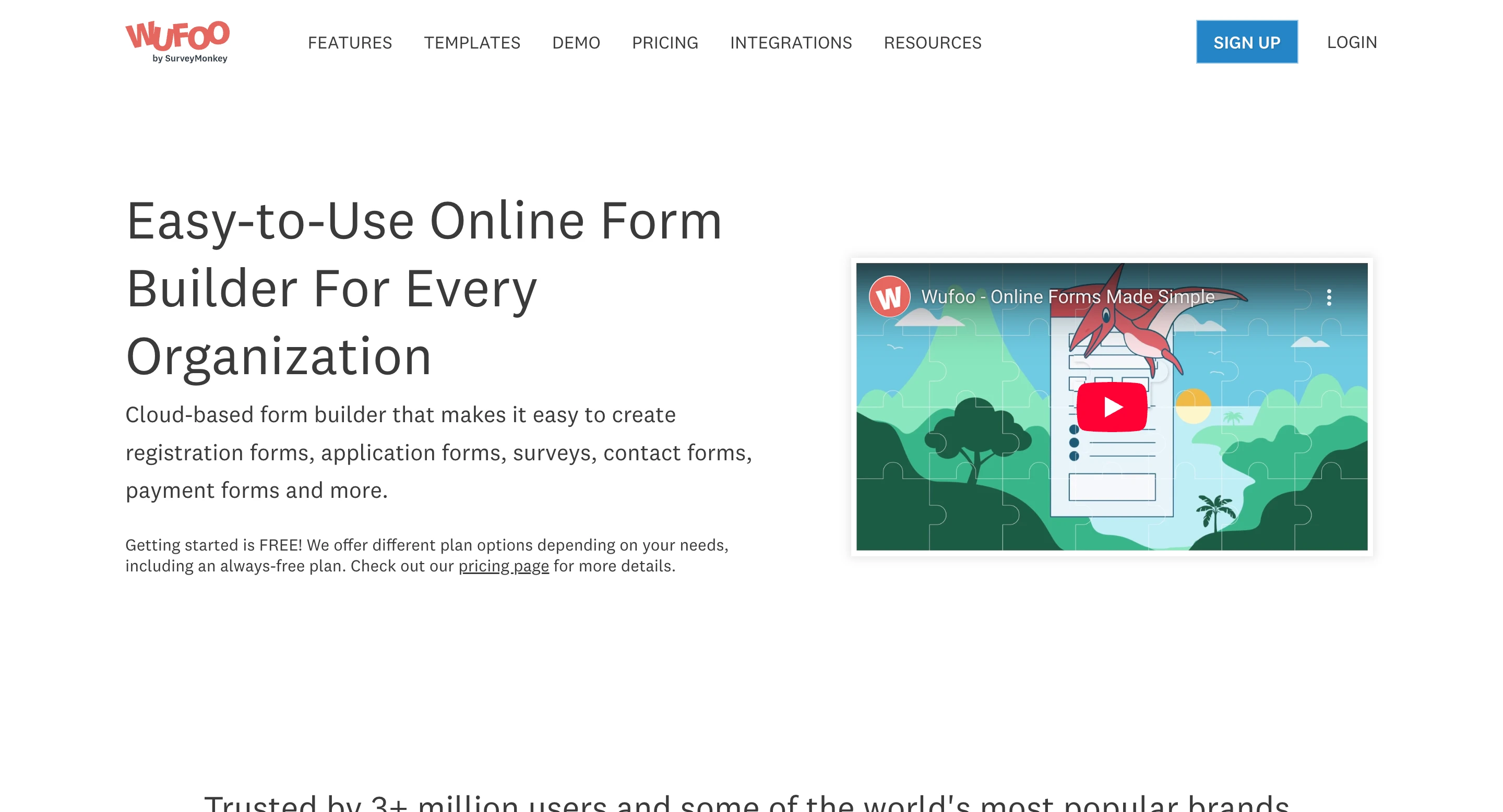
Best for: Teams that prioritize speed over design
Wufoo is still a pretty solid choice if you just want to get something up and running fast. The interface looks a bit old-fashioned, but it is reliable and lets you process payments and use integrations.
So basically if you just need something simple that works, Wufoo is a good enough option.
14. Involve.me
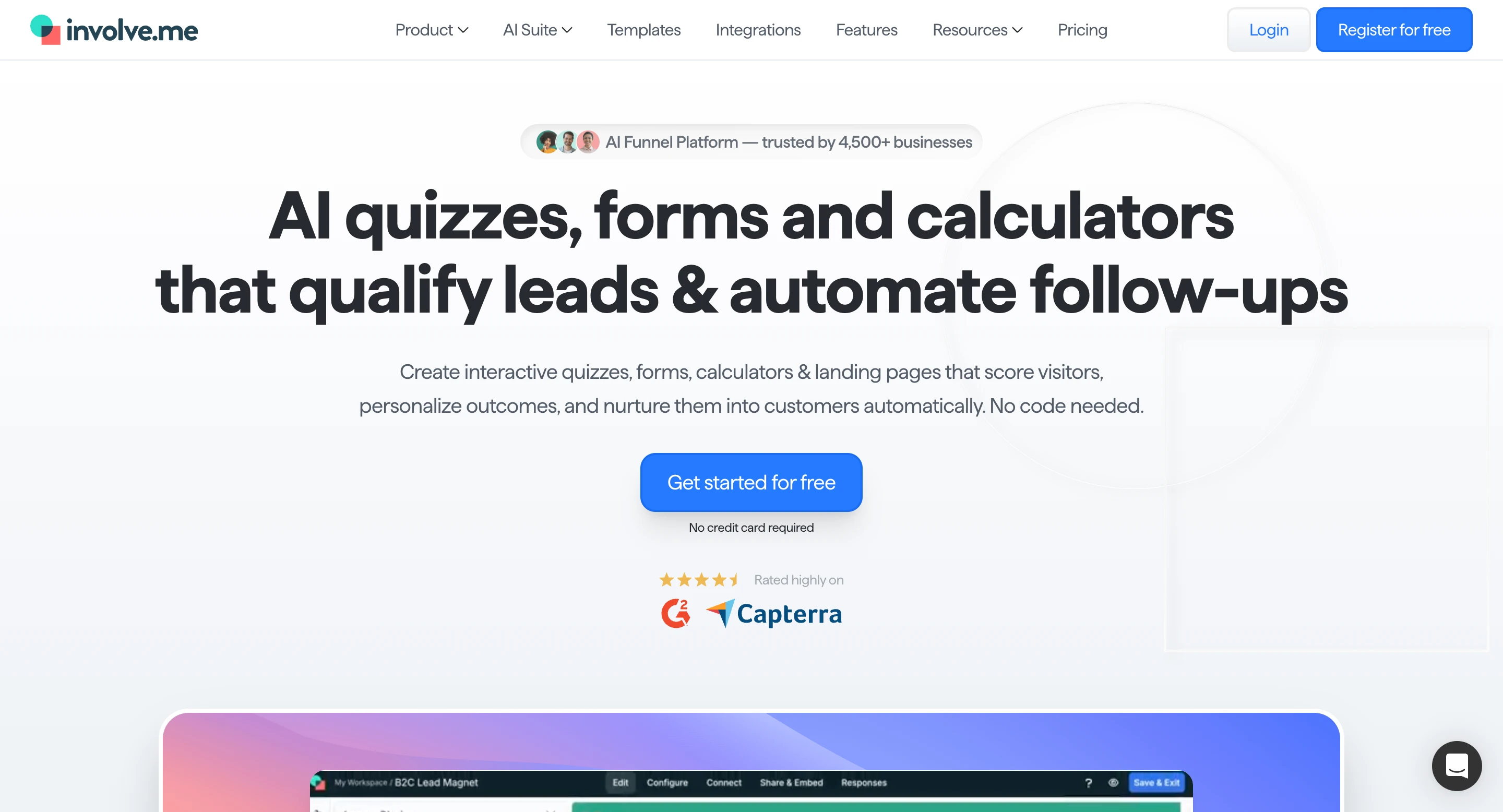
Best for: Teams that want to qualify and convert leads through interactive content
Involve.me lets you build interactive things like quizzes that recommend products and calculators that show ROI. And these kinds of things often get more people involved than your standard static forms.
For campaigns aimed at the top of the funnel, using interactive content can really get more people to participate.
15. Klaviyo Forms
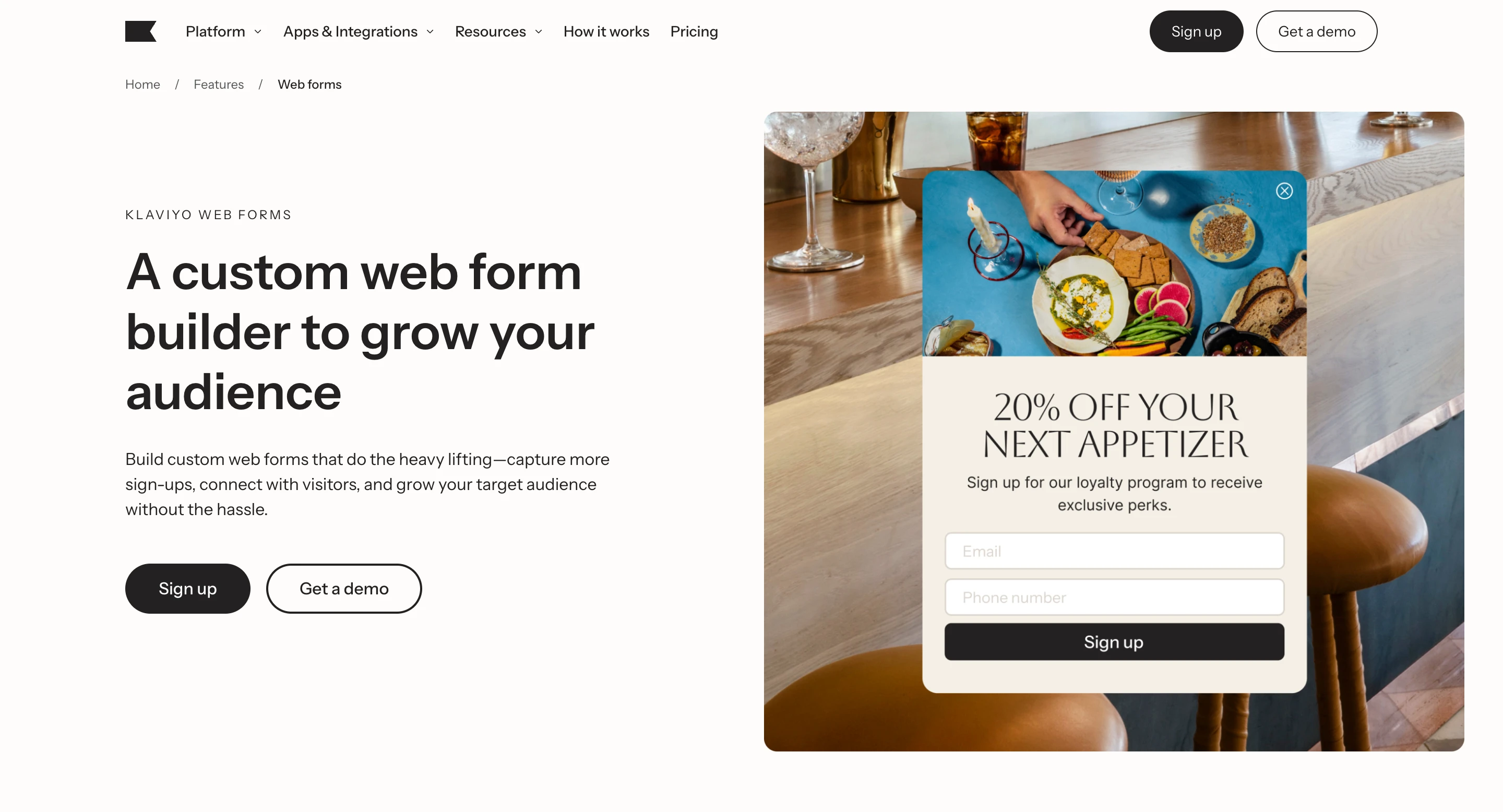
Best for: DTC and ecommerce marketers
Klaviyo Forms are designed to be used with Klaviyo’s tools for segmentation and automation. Submissions are able to trigger email or SMS flows that are highly personalized and based on how the customer behaves, very useful.
If you are an e-commerce brand that is already using Klaviyo, then having this kind of integration is going to make growing and keeping customers a lot easier.
Final Thoughts: What Is the Best Typeform Alternative?
Deciding on the best Typeform alternative really comes down to what you are actually trying to get done with it.
If what you are looking for is just a simple, easy-to-follow form for surveys or gathering some basic data, then software like Tally or Jotform will probably do the trick.
They are not hard to figure out, they are pretty adaptable, and they work well enough for simple stuff.
But if you are really trying to generate leads, and dealing with paid web traffic, and seriously trying to improve conversion rates, then it’s a different story altogether.
Typical form builders just get you the raw data. Platforms that are built for conversions help you sort the good leads from the bad, try out different versions of forms, and generally improve performance.
When you are spending money to get leads, and the cost per lead is important, than you need features like advanced logic, the ability to easily A/B test different versions, unlimited submissions, and being able to track everything.
That is were a more complete quiz or funnel system is different from just a plain form tool.
So, before you decide on a platform, figure out what is most important to you:
- Getting survey results.
- Building up an email list?
- Putting together interactive quizzes
- Scaling up paid advertising campaigns
- Or managing a large number of leads.
Once you know what you are after selecting the right tool is easier.
Most of the platforms that I have mentioned here give you a free trial or a free plan. So, try out the ones that seem like they would fit your needs, see how well they do, and pick the one that will actually help you grow, and not just get you some forms.
Landerlab combines landing pages, quiz funnels with AI, A/B testing, and analytics in one place.