Heyflow vs Jotform: Why Both Cost More When Your Ads Work
Jotform switches your form off at the cap, and Heyflow holds your leads until you pay more. Here is what that costs a paid traffic campaign, and what to use instead.
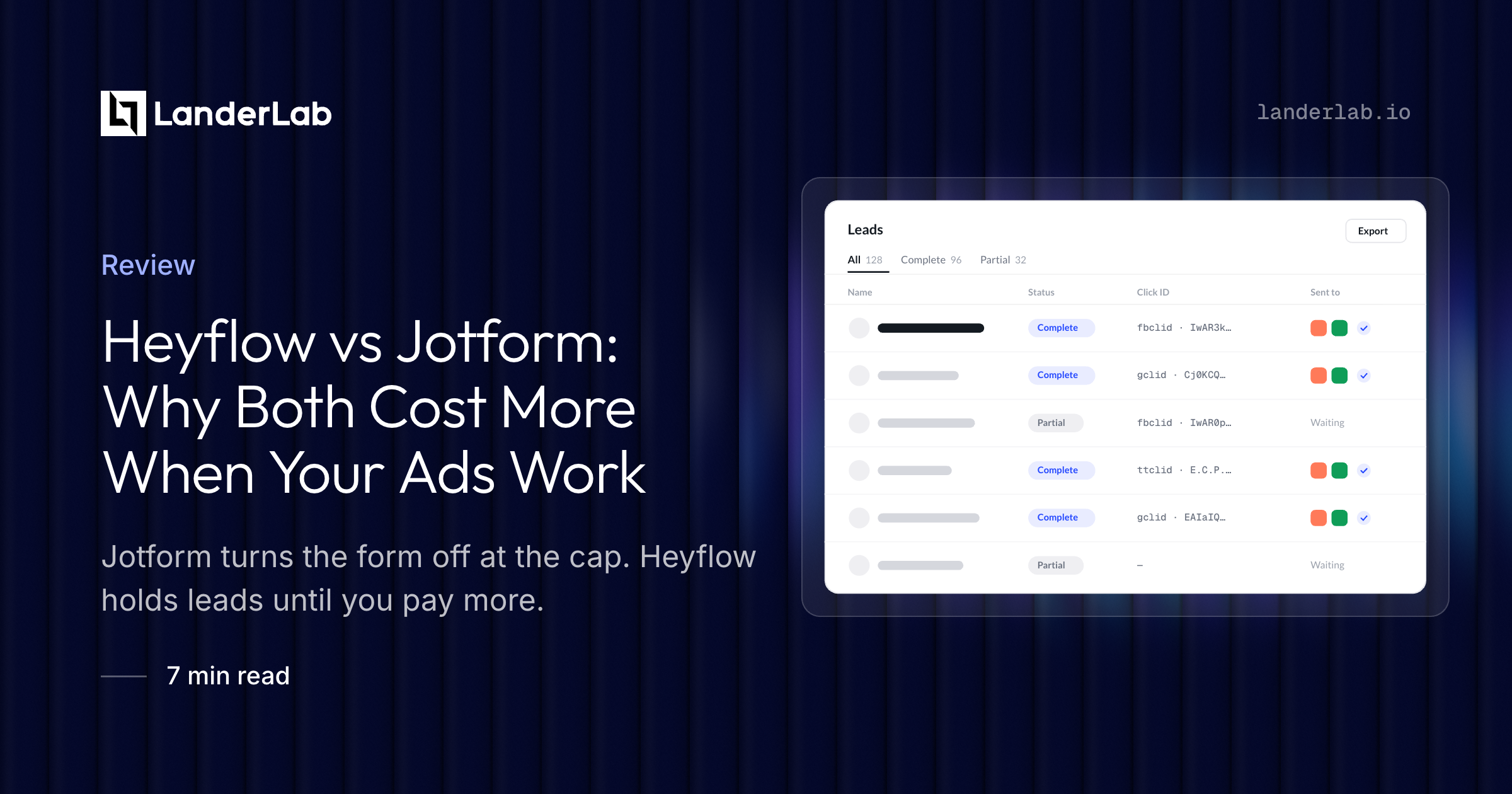
Here is an example, not a real account, of how Heyflow vs Jotform plays out on paid traffic. A media buyer sends Meta traffic to a solar quiz built on Jotform's Silver plan, which allows 2,500 submissions a month. In the second week, a new ad starts to work and leads double.
On day 19, the account reaches 2,500. Jotform disables the form. The ads keep spending, and every click now lands on a message saying the form has exceeded its quota.
Move the same campaign to Heyflow's Starter plan and the funnel stays live. But after 50 responses, new leads are saved and held. They do not reach the dashboard or the CRM until the buyer pays $0.20 to $0.24 for each one.
Both tools did what their pricing pages say. That is the trouble. Each one ties its price to the number your campaign is trying to grow.
Prices below were checked on October 21, 2026, in US dollars on yearly billing, before tax. The short version:
- Jotform is the cheapest per submission, at $34 a month for 1,000. It switches the form off at the cap, and your own domain needs Enterprise.
- Heyflow is built for ad funnels, but A/B testing and server-side tracking start at $299 a month. Every lead past your allowance costs $0.20.
- LanderLab prices by visits with unlimited leads. Quiz funnels come on every plan, the free one included, and paid plans start at $69 a month.
Heyflow vs Jotform: Two Ways to Charge for Leads
Heyflow charges per lead past your allowance. Jotform sells leads in blocks and stops at the end of each block. Either way, a better ad or a better page raises your software bill.
Heyflow's math is simple. Starter includes 50 responses, and each extra one costs $0.20 on yearly billing. At 1,000 leads a month, that is $219. At 3,000, it is $619, or about 21 cents per lead on top of your media spend.
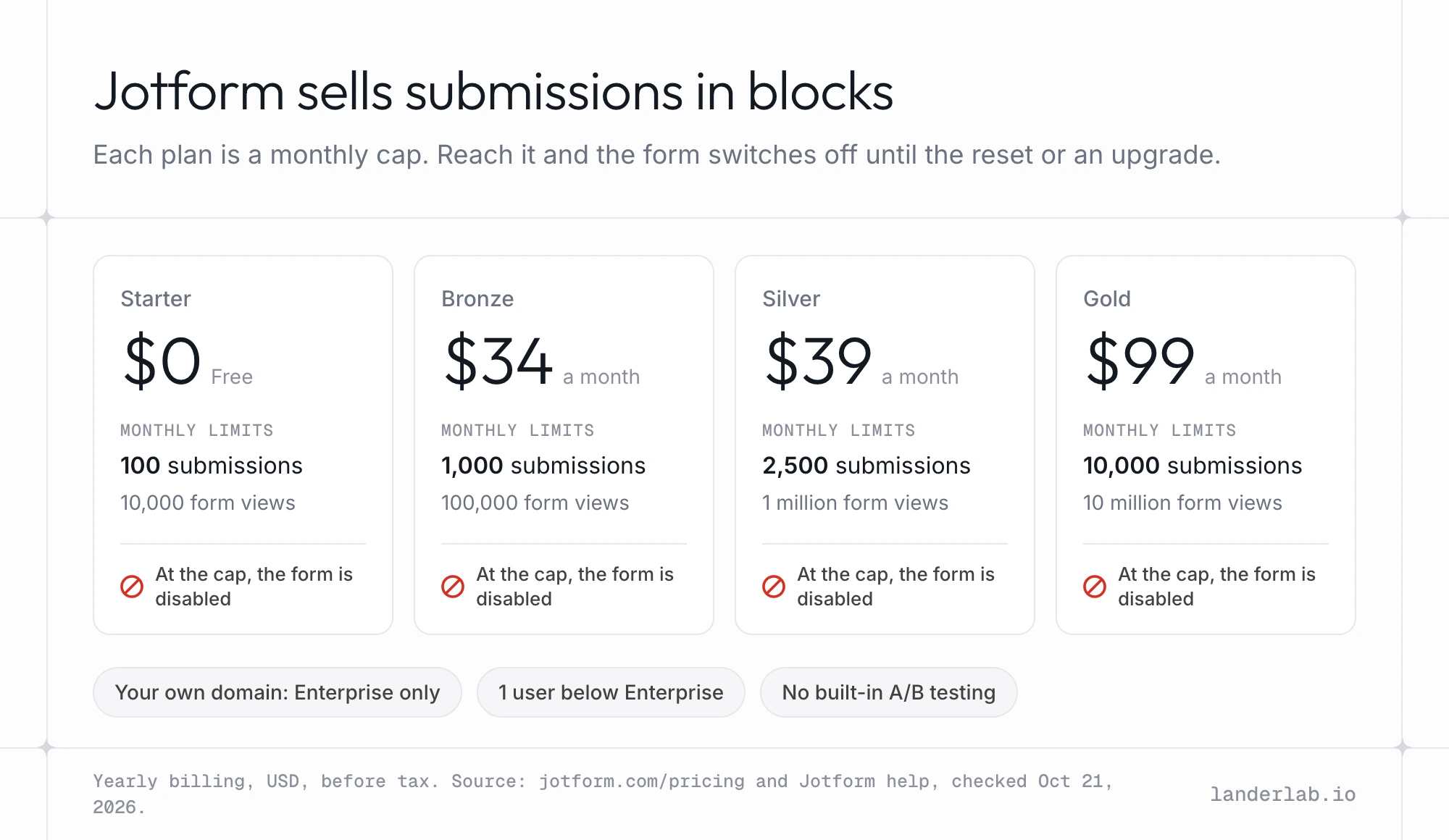
Jotform works in steps instead. Bronze covers 1,000 submissions for $34, Silver 2,500 for $39 and Gold 10,000 for $99. The steps are cheap, but each one ends in a hard stop, not a fee.
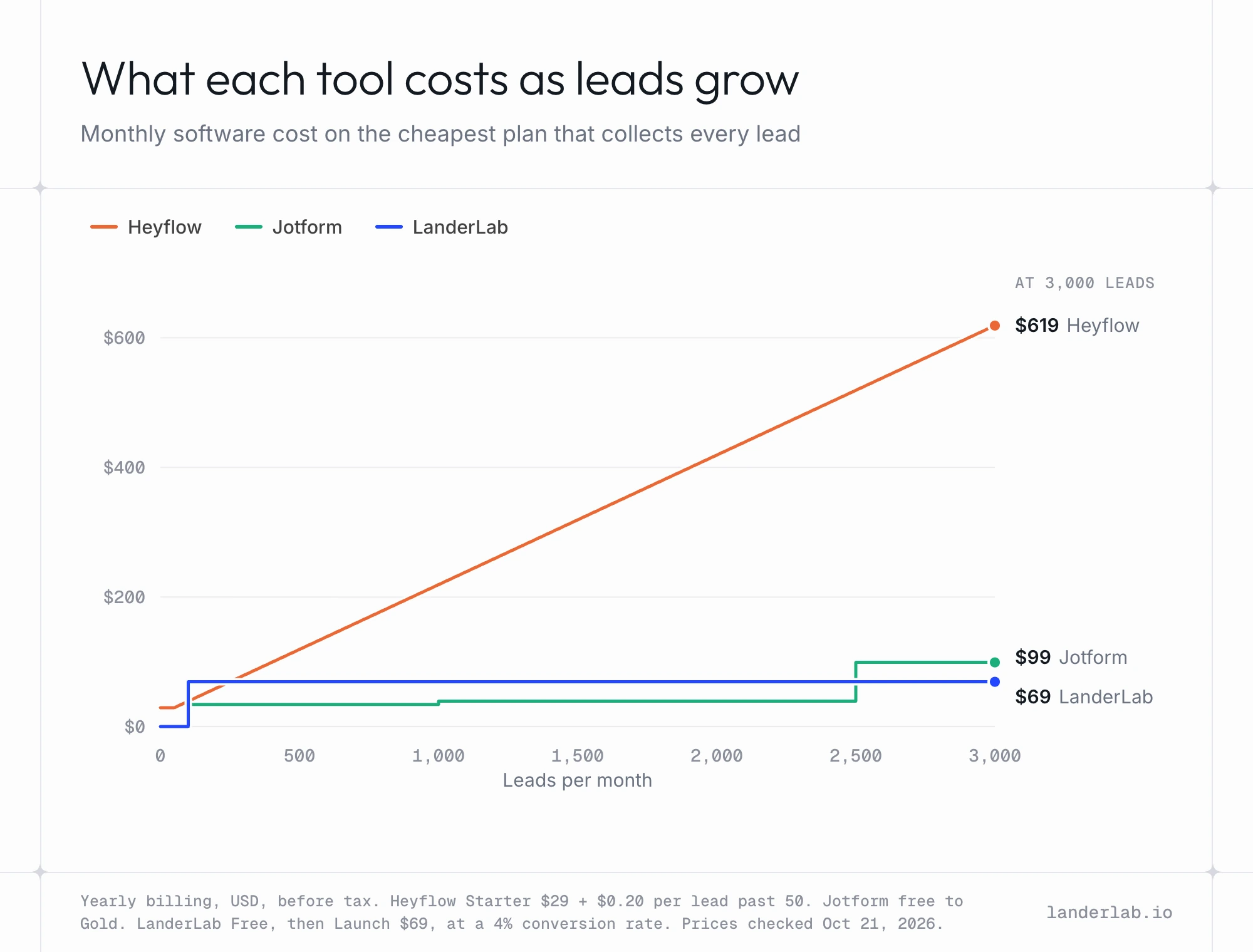
Neither model is wrong for a contact form. For a campaign where you want leads to double, it is a poor fit, because the tool gets more expensive or switches off right as the campaign works. Put the software cost next to your cost per lead benchmarks to see how much it moves your margin.
Jotform Is a Strong Form Tool Pointed at a Different Job
Jotform handles forms for almost every use, and it handles them well. Paid traffic needs a few things that Jotform leaves to widgets, workarounds or Enterprise.
Its strengths are real. Jotform has more than 20,000 templates, 40 payment integrations, approval workflows and HIPAA forms with a signed agreement on Gold. The free plan covers 100 submissions a month. If that is your job, Jotform is hard to beat on price.
Now look at it the way a media buyer would:
- Your own domain on the form needs Enterprise.
- Google Analytics and Tag Manager tracking needs the source-code embed. With the standard iframe embed, your page scripts cannot see the form, according to Jotform's own help pages.
- The Meta Pixel comes through a widget.
- There is no built-in A/B testing. A 2020 Jotform support reply confirms it, and the workaround is to clone the form.
- SMS codes need your own Twilio or D7 account.
- Every plan below Enterprise has 1 user.
Prices and limits for each tier come from Jotform's pricing page, checked on October 21, 2026.
Heyflow Is Built for Funnels, but the Best Parts Sit on Scale
Heyflow understands ad traffic far better than Jotform does. The catch is which plan each feature lives on.
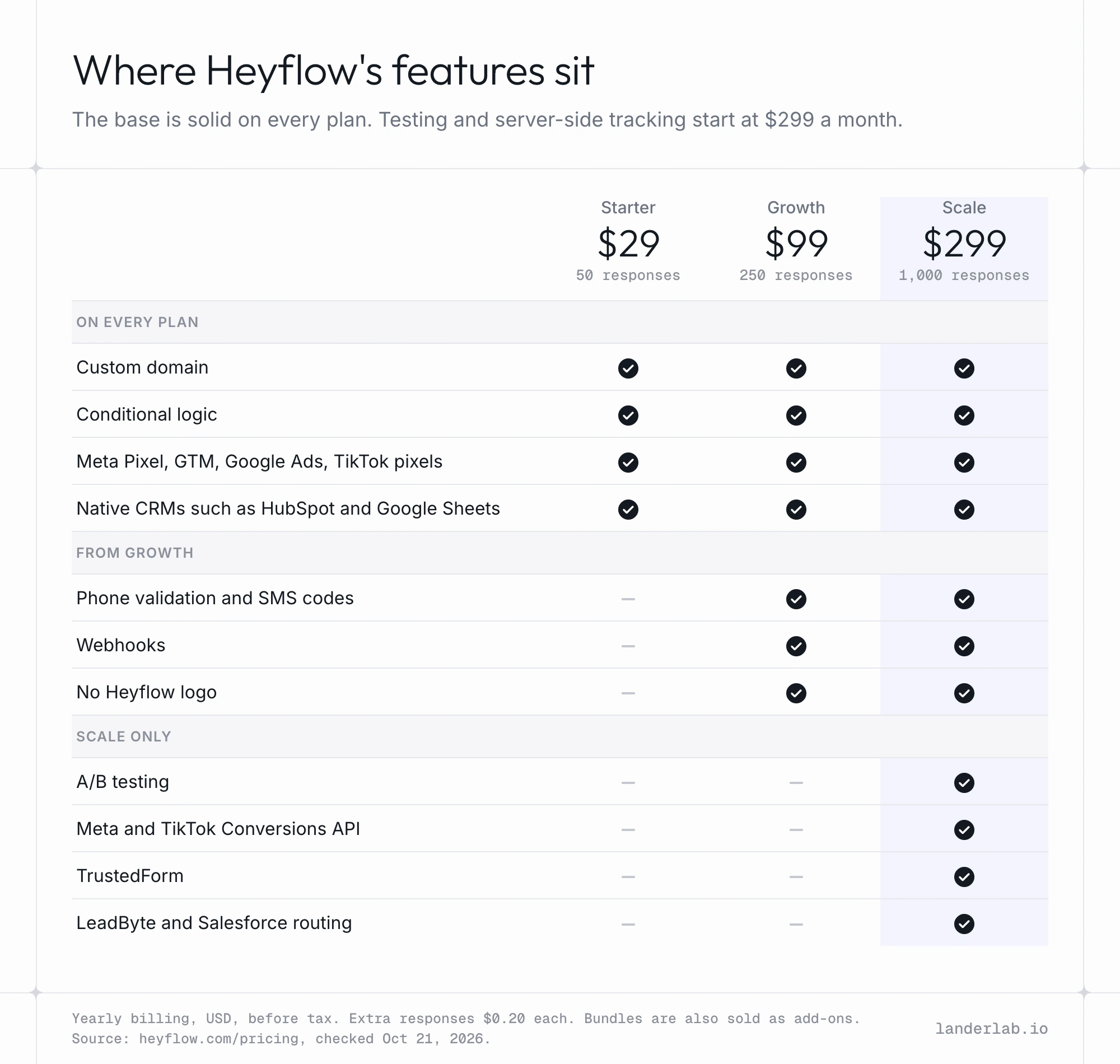
Every Heyflow plan gets custom domains, conditional logic and native pixels for Meta, Google Ads, TikTok and other ad networks. That base is solid. The features that protect lead quality and show what works sit higher up:
- Growth, $99 a month yearly: 250 responses, phone validation, SMS codes, webhooks and no Heyflow logo.
- Scale, $299 a month yearly: 1,000 responses, A/B testing, Meta and TikTok Conversions API, TrustedForm, and routing through LeadByte and Salesforce.
So the tools for scaling ads arrive on a plan that costs about 10 times Starter. Scale also includes the most responses, but past 1,000 you are back to paying $0.20 a lead. The full bundle list is on Heyflow's pricing page.
Heyflow deserves credit in 2 places. Leads past the cap are held, not lost. And all data is hosted in Europe, with SOC 2 Type II certification and HIPAA support.
The Cap Is the Real Price
The price on the page is what you pay in a normal month. The cap decides what you pay in a good one.
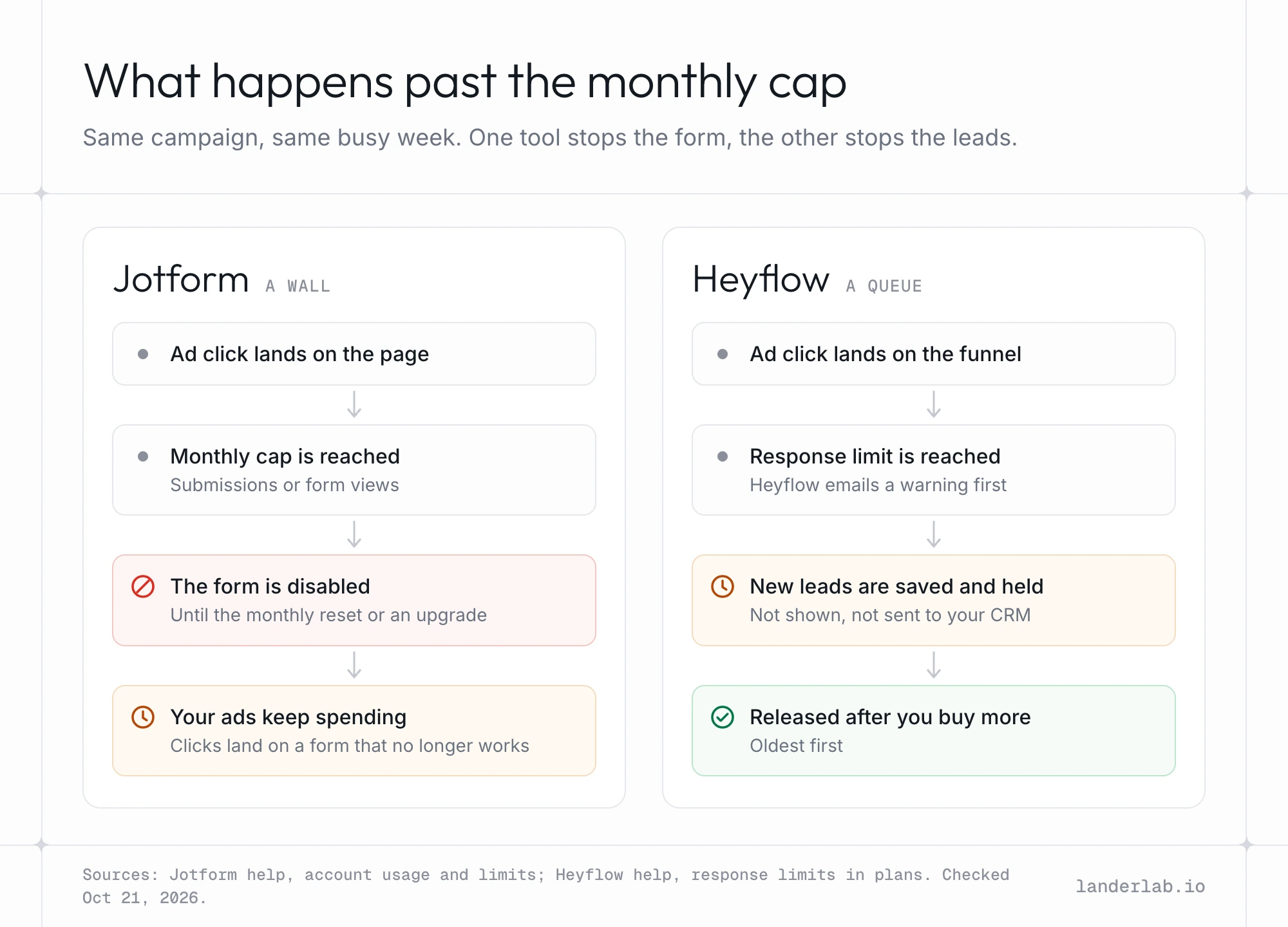
Jotform's cap is a wall. Forms are disabled on the date given in a warning email, and they stay off until the monthly reset or an upgrade, according to Jotform's help center. Stored entries have their own cap, and past it, each new entry deletes the oldest.
Heyflow's cap is a queue. The funnel keeps running and responses are saved, but your sales team or lead buyer does not see them until you buy more volume. Heyflow's help center says held responses are released oldest first once you top up.
A wall wastes ad spend, and a queue delays leads. So size your plan to your best month of leads, not your average one.
What a Cheaper Alternative Needs to Do
For ad traffic, a tool is only cheaper if it keeps working at volume. Look for these 5 things.
- Pricing tied to traffic, not leads. A better conversion rate should never raise the bill.
- A/B testing on an affordable plan, under the same ad URL. You should not have to edit a live ad to run a test.
- Lead checks before the submit. Phone and email validation and SMS codes stop fake data at the form.
- Direct posting to your CRM or lead buyers. Each extra tool in the middle is one more thing to pay for and fix.
- Your own domain on the entry plan. Ads should point to a domain you control.
The guide on how to qualify leads in 7 steps covers point 3 in more depth.
Where LanderLab Fits, and Where It Does Not
LanderLab was built for paid traffic, and it prices by visits with unlimited leads on every plan. It is not the right tool for every form, though.
- Launch, $69 a month yearly ($89 monthly): 100,000 visits, unlimited quiz funnels and 5 custom domains.
- Grow, $119 a month yearly ($149 monthly): 500,000 visits, 3 users and A/B testing under the URL already in your ads.
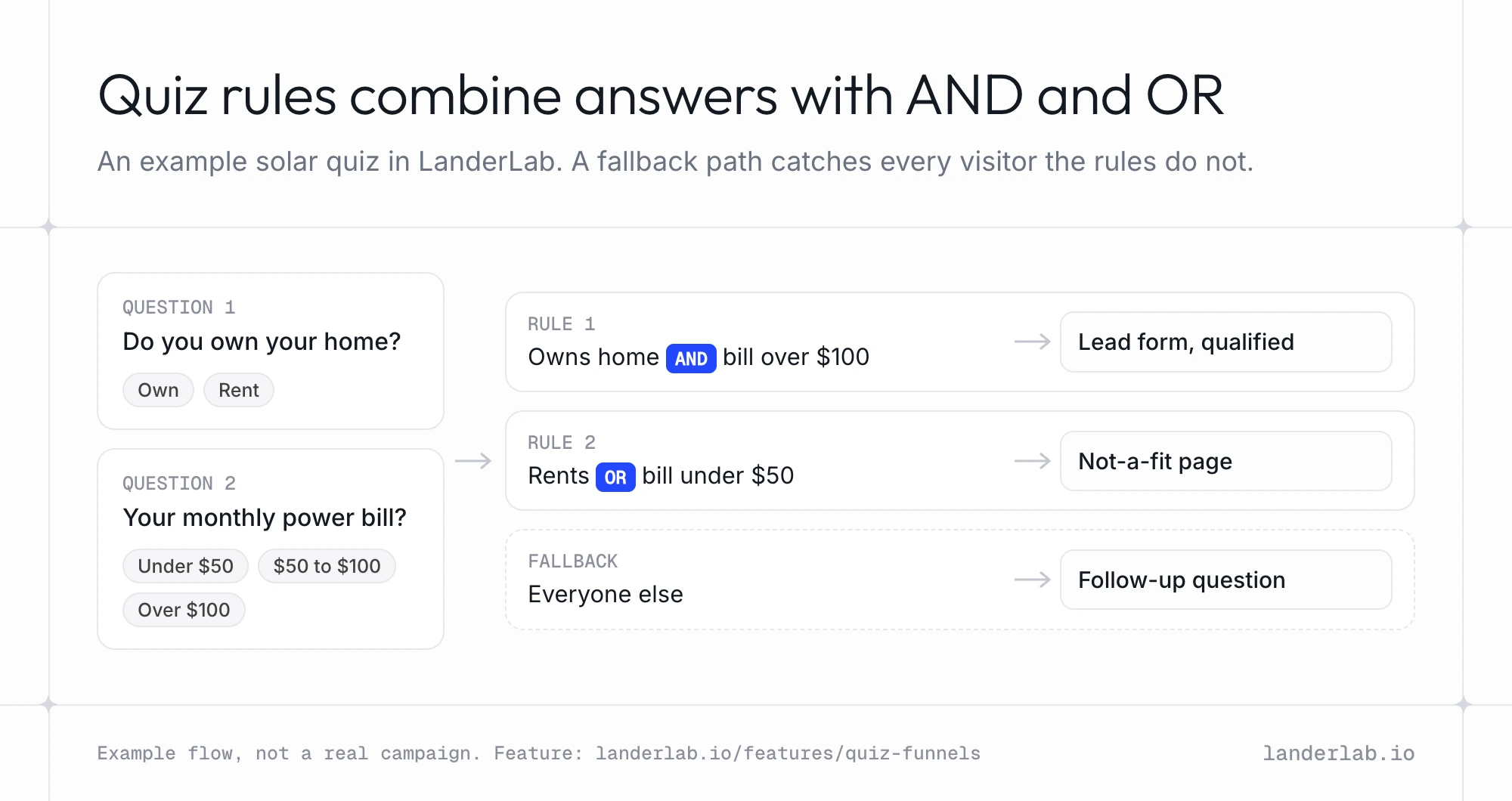
Phone and email checks are built in, and SMS codes cost $0.09 per verification on paid plans. Leads can post to LeadsPedia, LeadProsper or Phonexa on submit, and the Meta Pixel and Conversions API are native integrations.
At 3,000 leads a month, Launch stays at $69 if your pages convert at 3% or better. Heyflow Starter plus extra responses would cost $619, and Jotform Gold $99. Full limits are on the LanderLab pricing page.
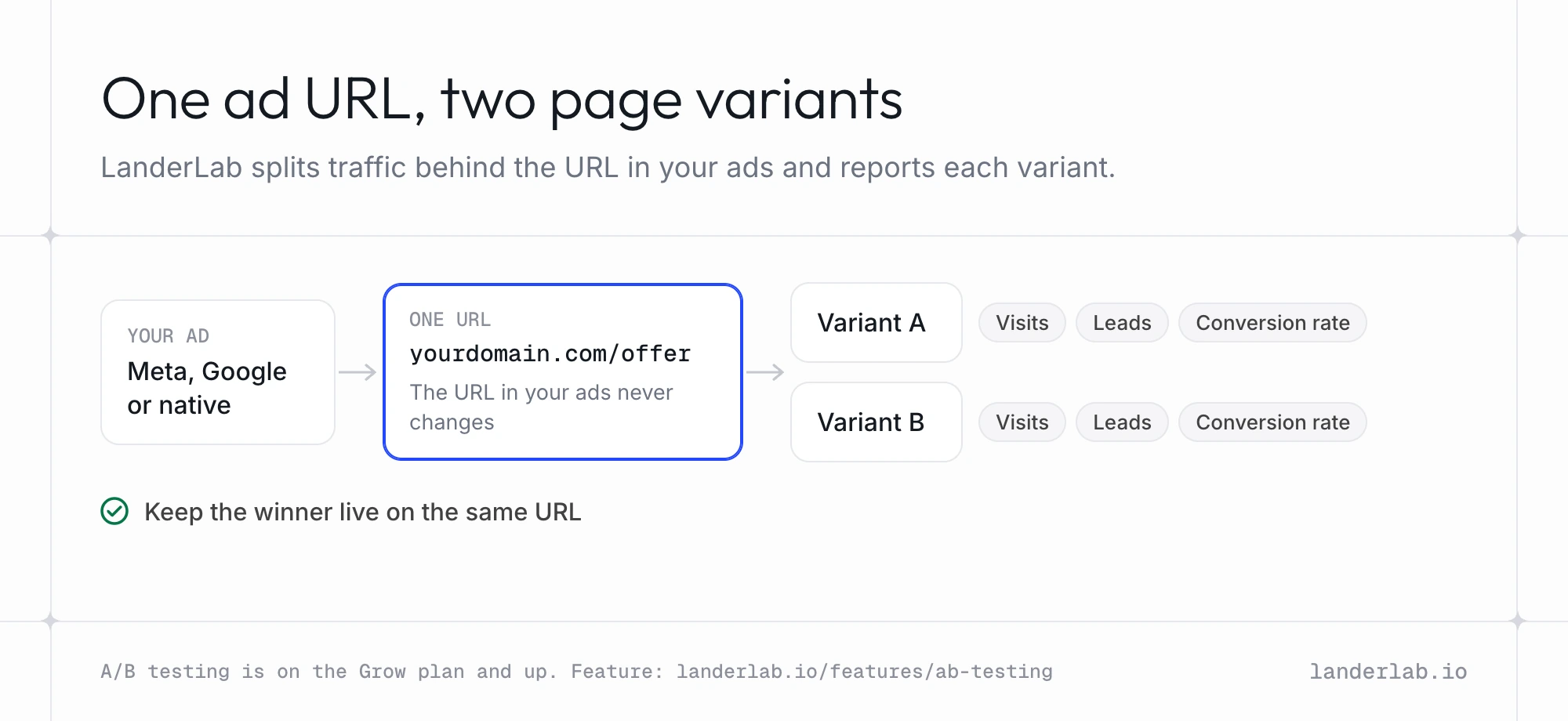
It has gaps. The free plan stops at 2,500 visits a month. Launch has 1 user, so teams need Grow. Partial leads, meaning answers from people who quit before the last step, need Scale at $239 a month. If your form takes payments or needs a HIPAA agreement, Jotform is the better tool.
If you want more options before you decide, compare the best Heyflow alternatives.
FAQ
Heyflow vs Jotform: Which Is Better for Paid Traffic?
Heyflow, if you need native ad pixels and your own domain on an entry plan. Jotform costs much less per submission, but it switches forms off at the cap and has no built-in A/B testing. At high lead volumes, a tool priced by visits costs less than either.
Why Is Heyflow More Expensive Than Jotform?
Heyflow charges per response past your allowance and includes funnel features like custom domains and ad pixels on every plan. Jotform sells submissions in large blocks, such as 1,000 for $34 a month on yearly billing. It leaves custom domains to Enterprise.
Does Jotform Stop Working When You Hit the Limit?
Yes. Jotform disables your forms when the account reaches its monthly submission or view limit. They come back at the monthly reset or after an upgrade.
Which Heyflow Plan Includes A/B Testing?
Scale, at $299 a month on yearly billing or $369 monthly. A/B testing sits in the Insights bundle with Meta and TikTok Conversions API. Heyflow also sells that bundle as an add-on.
Is There a Free Plan for Heyflow, Jotform or LanderLab?
Jotform has a free plan with 100 submissions a month. Heyflow has no free plan, only a 14-day trial. LanderLab's free plan includes quiz funnels, 2,500 visits a month, 5 pages and 1 custom domain.
Run the Numbers on Your Best Month
Before you settle Heyflow vs Jotform, take your best month of leads and price each tool at that number. Then check what each one does at the cap. If you want a funnel that costs the same in a good month, start on LanderLab's free plan. Move to Launch when you pass 2,500 visits a month.